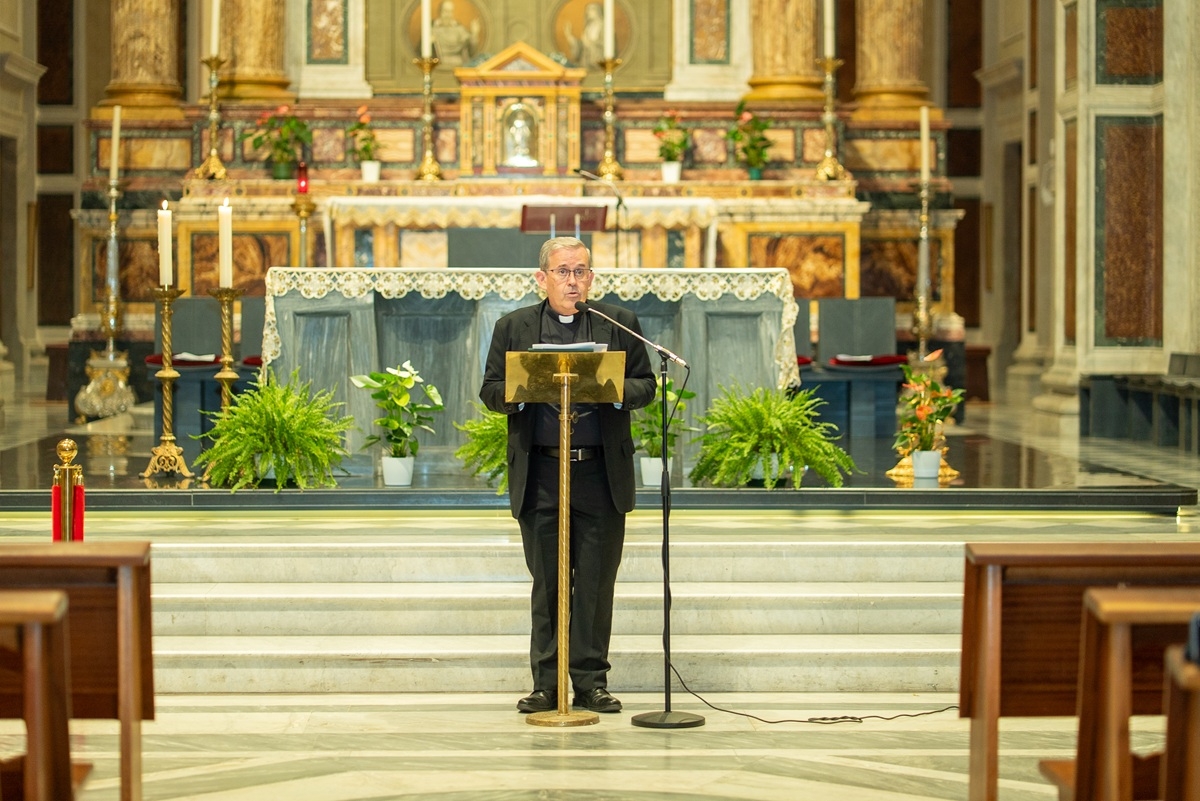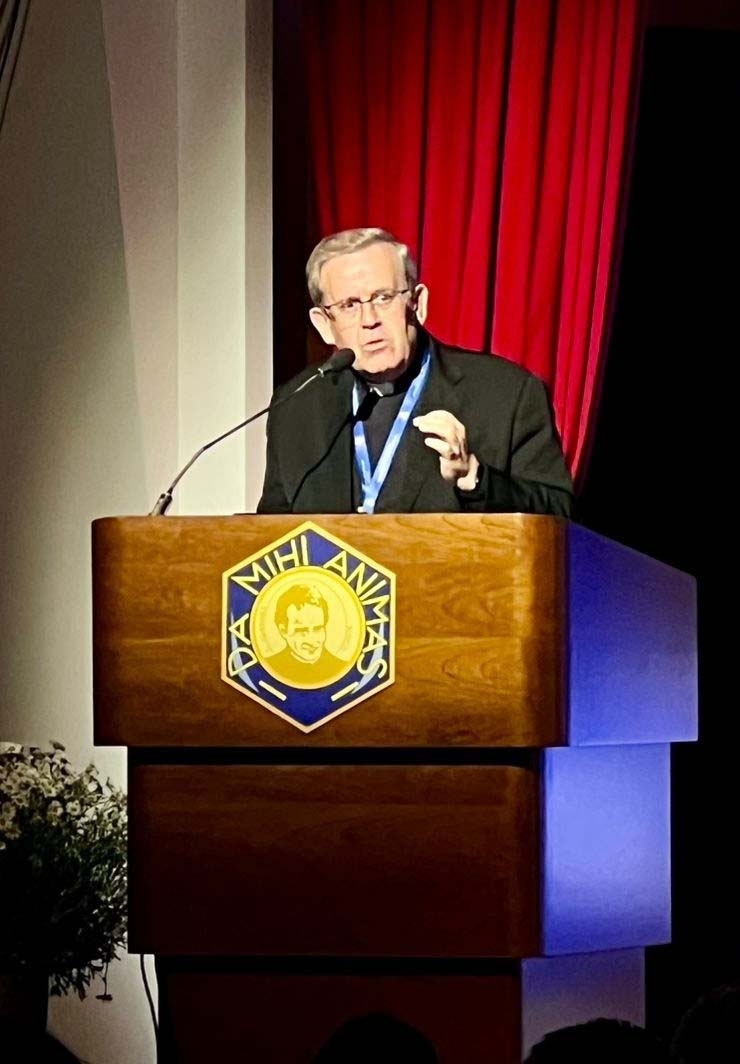
The event was also an opportunity to celebrate the association’s 150th anniversary. The reflection that Fr Attard wished to share was divided into three parts. In the first, he focused on the original project “which the Spirit inspired in Don Bosco’s heart, to understand how the Cooperators were conceived from the very beginning as ‘leaven’ in the Church and society”.
“From the very early years of the Valdocco Oratory,” recalled the Rector Major, “Don Bosco understood that the dream of ‘saving young people’ could not be a solitary endeavour. We see him surrounded by priests and laypeople, men and women, adults and young people, benefactors, friends, craftsmen and teachers. What he offers the young people is not merely a social service or pious devotion, but a holistic experience: education, work, friendship, faith.”
In this project, “the Salesian Cooperators do not arise as an ‘accessory’, but as an integral part of this extended community: a movement of people acting as leaven of the Salesian spirit in the world. Not everyone can live in a religious community, not everyone can devote themselves full-time to a mission, but many, very many” Fr Attard explained “can bring the spirit of Valdocco into the family, work, society and civic engagement. Like leaven, the Salesian Cooperators are called to be within the dough, not separate from it.”
150 years on, “the mission of the Salesian Cooperators continues to be a response that is more relevant and urgent than ever”. Don Bosco’s goal was the salvation of young people. “For him, this meant helping young people to become fully human men and women, capable of work, affection, faith and responsible citizenship. For salvation,” he continued, “is life in its fullness, here and now, where time is open to eternal life.”
In the second part, the Rector Major sought to explain what it means to be Salesian leaven in history, and he did so by referring to “four traits that emerge from Don Bosco’s project: active collaboration and shared responsibility; the centrality of the education of young people as the cornerstone; the spirit of pastoral charity as a path to personal holiness; and presence in society for the common good.”
In the third part, drawing on the Gospel story of the wedding at Cana, he sought to “articulate four verbs – look, listen, choose, act – as concrete attitudes of a Salesian leaven called to bear fruit today.”
The first verb is to look. “Leaven,” he said, “does not work unless it is ‘placed’ in the right dough. Therefore, we must be able to see where young people’s lives struggle to ‘rise’, where relationships grow cold, where hope fades”.
The second is listening. “Leaven does not act if it remains hard and separate: it must allow itself to be kneaded into the flour. For us, this means embarking on a journey of deep listening.”
The third is choosing. “Leaven cannot be everywhere at the same time; it must be kneaded into a specific dough. So too, the association cannot do everything: it must discern and choose.”
Finally, the fourth verb is to act. “At Cana, after listening to Mary and Jesus, the servants filled the jars with water, brought it to the master of the banquet, and the miracle took place. They did their part; the rest was done by the Lord.” From this, the Rector Major highlighted two words “that recur on our journey: believers and free. In this historical phase, being believers does not mean taking refuge in the past or defending oneself from the world, but entrusting oneself to the God of life who continues to act today in history, often in surprising ways. From this faith springs inner freedom. A freedom that is not about doing whatever one wants, but being open to what the Spirit suggests. Free from nostalgia, so as not to remain prisoners of models that no longer speak to today’s young people. Free from fear, so as not to be afraid to enter the new peripheries – digital, cultural and existential. Free to be small and hidden, because we know that true fruitfulness is not ours but God’s.”
Francesco Ricupero
Source: L’Osservatore Romano