A Long Preparation and the Apostolic Letter Geminata Laetitia
The canonisation represented the culmination of a long and rigorous canonical process. The cause had been introduced in 1890, just two years after the Saint’s death. In 1929 Don Bosco had been proclaimed Blessed, and in the years that followed the miracles required for canonisation were examined and approved.
Once the necessary procedures had been completed, the Holy See prepared the Apostolic Letter of canonisation entitled Geminata Laetitia (“Twofold Joy”). The title expressed the double reason for rejoicing on that day: the Easter joy of the Church and the joy of enrolling a new Saint in the register of the universal Church. In it, Pius XI officially proclaimed Don Bosco a Saint, presenting him as a radiant honour of Italy and of the entire Catholic world, an exemplary priest and father of the young.
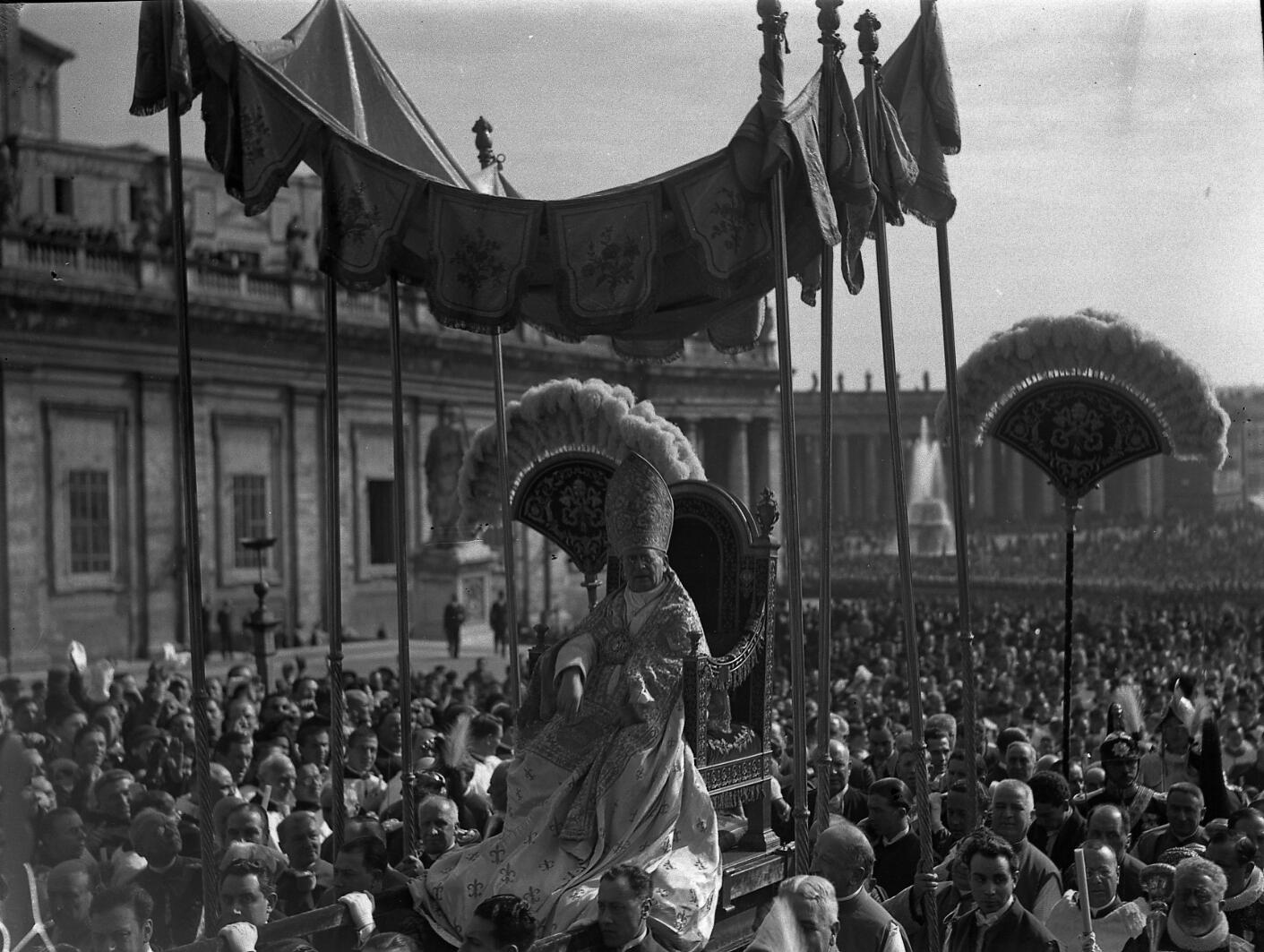
The Solemn Celebration in St Peter’s
The ceremony was carried out with extraordinary solemnity. The Vatican Basilica gathered a large college of cardinals, numerous bishops and priests, men and women religious, together with a vast number of lay faithful. Among them stood out the presence of thousands of Salesians, Daughters of Mary Help of Christians, Cooperators and, above all, young people from Salesian works.
Their participation was deeply symbolic. The Church was not canonising a saint withdrawn into the silence of a cloister, but a priest who had lived among young people, in playgrounds, schools and workshops. St Peter’s Basilica seemed almost transformed into a great universal oratory, where the joy of the young bore witness to the fruitfulness of Don Bosco’s charism.
Contemporary accounts speak of profound emotion, prolonged applause and a deep sense of gratitude. The event was perceived not only as a solemn liturgical act, but as the celebration of a spiritual father whose holiness was being officially recognised.
The Homily of Pius XI: Don Bosco Priest and Educator
The homily delivered by Pius XI during the solemn Mass remains one of the most significant papal texts concerning Don Bosco. The Pope first presented the new Saint as “John, priest of Italy”, underlining the centrality of his priesthood. All his educational work sprang from his deep union with Christ and his total fidelity to the Church.
Pius XI highlighted several fundamental characteristics of his holiness: firmness of faith, heroic charity, pastoral courage and ecclesial obedience. Don Bosco was not merely a philanthropist or a social reformer, but an authentic apostle of the young.
Particular emphasis was given to the educational dimension of his mission. The Pope presented him as a father and teacher of youth, capable of understanding the hearts of the young and guiding them through the preventive system founded on reason, religion and loving-kindness. In an era marked by ideological tensions and profound social change, the Church thus proposed a model of active holiness, rooted in pastoral charity and educational commitment.
An Event of Strong Ecclesial and Cultural Impact
The canonisation had an immediate and lasting impact. It strengthened the identity of the Salesian Family and gave renewed impetus to Catholic education throughout the world. The Letter Geminata Laetitia and the homily of Pius XI became reference texts for reflection on holiness lived in pastoral action and on the urgency of Christian education for the young.
The broad popular participation testified to Don Bosco’s profound spiritual and cultural influence. The presence of thousands of young people in St Peter’s was an eloquent sign: the Church recognised in him a Saint for modern times, an educator capable of uniting faith and human development.
The canonisation was therefore not merely a liturgical act, but an event of living magisterium. In a period of great social and political transformation, the Church renewed her commitment to youth, presenting Don Bosco as a model for priests, educators and Christian communities.
A Meaning that Endures through Time
Nearly a century later, the canonisation of 1 April 1934 remains an event rich in significance. It represents the fulfilment of a long process of ecclesial discernment, a visible manifestation of the Church’s vitality among the young, and a pedagogical and spiritual point of reference for future generations.
The holiness of Don Bosco, proclaimed on the day of the Resurrection, continues to shine as a sign of hope. It reminds us that holiness is possible in daily life — in playgrounds and schools, in educational service and pastoral dedication. And the Church continues to look to Saint John Bosco as father, teacher and intercessor for young people throughout the world.
wp-content/uploads/images/Ricordi Canonizzazioni DB