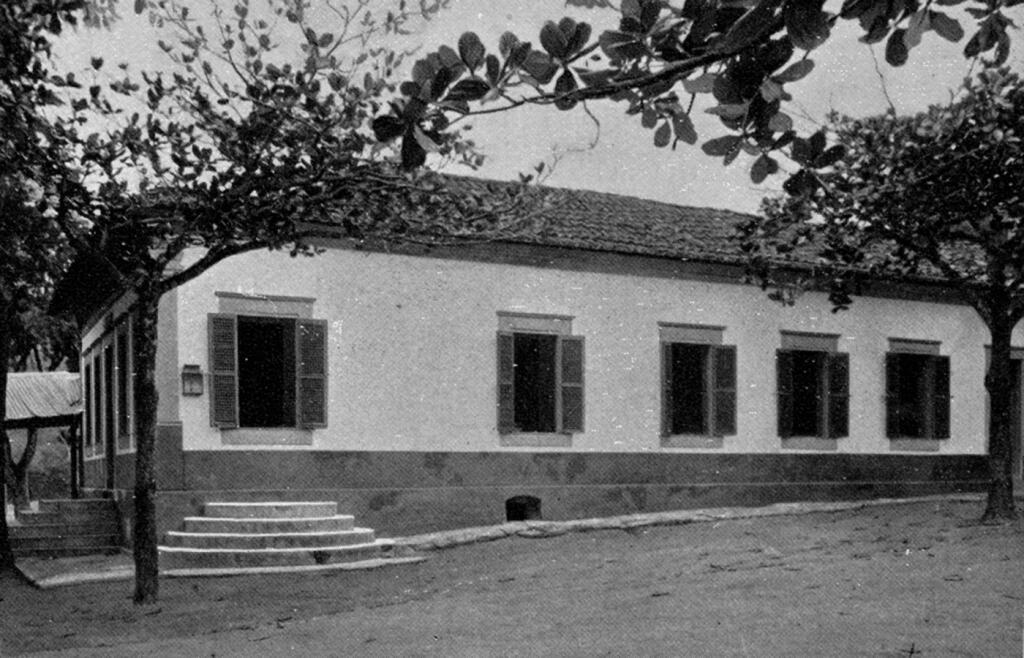
(ANS-Niterói) – Exactly 143 years ago, on 14 July 1883, the Salesian Congregation took its first steps in Brazil. Seven priests, led by the Provincial, Fr Luigi Lasagna, disembarked at Piazza XV (Cais Pharoux) in Rio de Janeiro, having travelled from Uruguay, thus beginning a mission that today comprises six Salesian Provinces and over 650 professed Salesians throughout the country. The religious were welcomed enthusiastically, as recorded in the Congregation’s historical accounts: “On 14 July 1883, the Salesians finally arrived in Brazil from Uruguay and were welcomed with extraordinary kindness by Emperor Dom Pedro II, who showed the utmost interest in the Salesian works.”
An impromptu arrival
After disembarking in Rio, the Salesians made their way to the city of Niterói, where the Colégio Santa Rosa – the country’s first Salesian school and the “mother house” of the Salesian presence in Brazil – still operates today. But their reception was not as straightforward as the Emperor’s gesture had suggested.
Upon reaching the house that was to become their new home, the priests found the place locked and empty. The Bishop of Rio de Janeiro, Pedro Maria de Lacerda, was travelling in the state of Minas Gerais and was unable to welcome them. With no other choice, the Salesians broke through a window and entered that way.
Inside the house, there was almost nothing. Their first meal on Brazilian soil was made possible thanks to the generosity of neighbours and local friends. Canon Luís de Brito, their neighbour Benevides, Antônio Correa and the Mourissy family offered eggs, cheese and bread to the new arrivals.
A tradition spanning generations
This simple gesture by the neighbours gave rise to a custom that continues to this day. Every year, on 14 July, the Mourissy family began offering cheese to the Salesians in remembrance of that first encounter. Over time, rapadura* was also added to the tradition, and the symbolic presentation of cheese and rapadura to the Salesians has become an annual ritual.
From an empty house to six provinces
Starting from Niterói, the Salesians have opened oratories, missions, social projects and a wide range of activities for young people and the general public, leading to the current situation of six Salesian provinces in Brazil with over 650 professed Salesians, continuing a story that began, quite literally, from a window.
Fr Narciso Ferreira
* Rapadura is an unrefined, brown-coloured cane sugar, typical of Brazil, obtained by boiling and solidifying sugarcane juice (guarapo) into rectangular blocks resembling small bricks.