Japan – Interview with Fr Achille Loro Piana: a life of missionary work in Japan
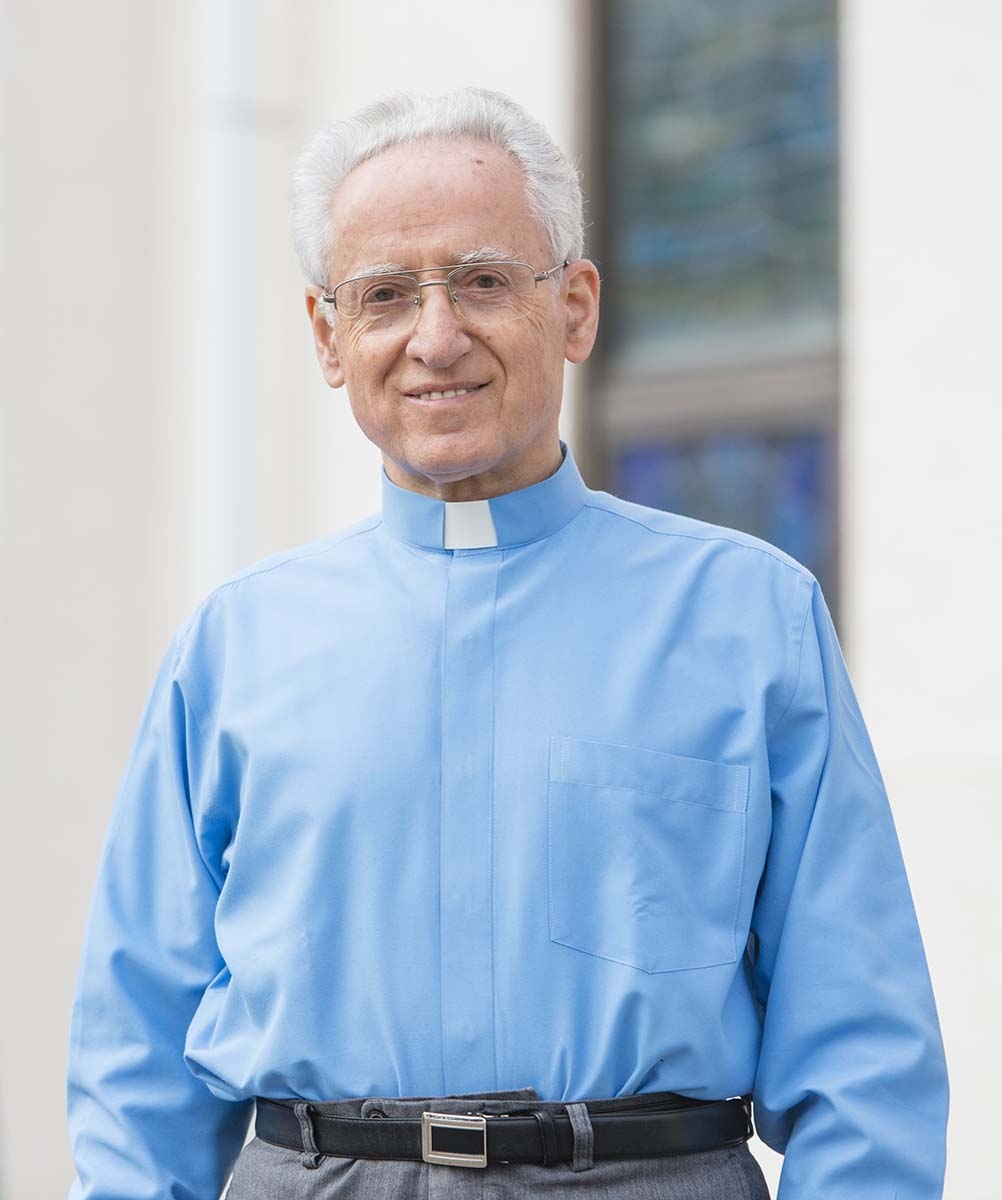
(ANS – Nagasaki) – This interview with Fr Achille Loro Piana offers an in-depth insight into his nearly 60 years of missionary service in Japan. Below is the text, organised and supplemented with the initial questions and the spontaneous dialogue that took place during the interview.
Could you briefly introduce yourself?
My name is Father Achille Loro Piana; I am a Salesian missionary. I completed my novitiate at Colle Don Bosco between 1962 and 1963. I am Italian and, right from the start, I expressed a desire to serve as a missionary in a country with few Christians. This led me to the mission in Japan. Before arriving there, I prepared myself by studying philosophy in Hong Kong, where I had the opportunity to improve my English.
What inspired you to choose the missionary life and, in particular, Japan?
I wanted to work in a place where Christianity was little known. In Italy, everyone was Christian, but I felt that God was calling me to bring the faith where it was most needed. Japan was an opportunity to live out this vocation to the full.
How did your family react to your decision to go to Japan?
My parents, particularly my mother, were initially against it, but in the end they accepted it, realising that this was my mission. I remember that, on my return to Italy after ten years as a priest, my mother looked at me and said: ‘You haven’t grown up at all!’ It was her affectionate way of expressing how much she had missed me.
What can you tell us about your years on mission in Japan?
I arrived in Japan 59 years ago and held various roles. I began with my practical training and theological studies. I then worked in formation, setting up an aspirantate in 1974. I guided many promising young people towards the Salesian vocation.
I served for 15 years at St Elizabeth George’s parish in Tokyo, one of the most beautiful parishes we have. I then worked at the parish in Hamamatsu, which is home to a very diverse community, mainly comprising Brazilians, Filipinos, Peruvians and a small group of Japanese.
Today, at the age of 82, I am chaplain to the Sisters of Charity of Jesus in Nagasaki. I celebrate Mass for them and for the elderly sisters in the hospital. This role allows me to devote more time to prayer, meditation and translation work, which I have always carried out with passion.
What have been the main challenges of your mission?
Adapting to Japanese culture and language was an initial challenge. When I arrived, I wasn’t sent to a language school to learn Japanese, so I had to study on my own. It was a difficult journey, but necessary in order to integrate and serve as effectively as possible.
Another major challenge was witnessing the decline in vocations. When I arrived, there were 148 Salesians in Japan; today there are only 68 of us, including the elderly and those who are ill. However, I believe that God does not judge by numbers, but by the quality of our service.
How would you describe your relationship with Japanese culture?
I have always admired the richness of Japanese culture, with its ancient traditions and respect for others. However, one thing that is lacking in their culture is the concept of forgiveness. I learnt a great deal about this from my mentor, Fr Osamu Mizobe, a Japanese Salesian who later became a bishop. He taught me magnanimity and the ability to accept and forgive – qualities that are not common in Japan.
Have there been any particularly significant moments in your mission?
One experience that touched me deeply was accompanying a young Japanese man, Ciro, on his journey towards the priesthood. When I first met him, he was a university student. I invited him to study the catechism, and he subsequently became a Christian. Over time, he expressed a desire to become a priest and to work with the poor.
He faced many difficulties, such as studying in Sudan and battling malaria. Today he is completing his studies in theology and Salesian spirituality. One of the most beautiful moments for me was celebrating my 50th anniversary of priesthood in Italy with him by my side as a deacon. It was a great joy to witness his spiritual growth.
How has your view of faith and mission changed over the years?
My understanding of mission has evolved. I no longer think of the missionary as someone who brings the faith from a Christian country to a non-Christian one. I now see mission as a work of qualitative growth, where even a few people can make a difference. I believe that the greatest fruits of mission are holiness and the vocations that arise in places where the faith is less widespread.
What advice would you give to young people who feel the missionary call?
I always say that missionary life requires sacrifice. One must be prepared to give up many things, because it is in loss that we find the way of Jesus. He attained his glory on the cross by losing everything. Initial motivations may not be entirely genuine, but over time they must transform into a deeper, more spiritual desire.
What is your message for the Salesian world?
Support for missionaries is essential, both through prayer and practical help. We must also recognise the value of small communities and individual missionaries who live out their vocation with enthusiasm. The Salesian mission is not measured in numbers, but in passion for the Gospel and love for young people.
How do you see the future of the Salesian mission in Japan?
I am confident, despite the difficulties. Next year we will celebrate the centenary of the Salesians’ arrival in Japan. This event reminds us that, even in a context with few Christians, the mission can bear lasting fruit. It is God’s work, and I am confident that it will continue with vigour.
Father Achille Loro Piana has offered an extraordinary testimony, full of wisdom, faith and humanity. His life demonstrates how missionary service can transform not only the communities they serve, but also the missionaries themselves, enriching them with grace and love for their neighbour.