The crisis in the Middle East remains severe, particularly in Lebanon, where the ceasefire is fragile and has not entirely halted the violence. “Bombings continue to be reported in the south of the country and more than 50 localities have received evacuation orders, causing further displacement,” explain the Salesians working in Lebanon.
In the early stages of the recent escalation of violence alone, at least 30,000 people sought refuge in centres such as the Salesians’ facility in El Hossoun, whilst many others were forced to flee without resources, settling with family or friends or in uninhabited buildings. This situation compounds years of accumulated crises that have deeply weakened the country.
The humanitarian emergency is closely linked to a structural economic crisis. Since 2019, the Lebanese economy has contracted by more than 38 per cent, one of the most severe declines globally. Inflation and currency devaluation have sent commodity prices soaring, leaving a large part of the population without access to food, healthcare or education. Currently, around 44% of the population lives in poverty and many families are forced to make extreme decisions such as cutting back on food, taking on debt or withdrawing their children from school.
Displaced families: living on the bare minimum in extreme conditions
At the Don Bosco centre in El Hossoun, the Salesians are welcoming displaced families into spaces set up as shelters. Currently, more than a hundred people are living in makeshift facilities, with very limited resources and in emergency conditions.
Many of these families have been displaced repeatedly, have lost their homes and arrive with only the bare essentials. Furthermore, “these are people who have nowhere to return to. Some displaced people have tried to return to their homes, but most have been destroyed. So they will likely be with us for a long time,” add the Salesians.
Fear, trauma and psychosocial support
Beyond basic needs, the war leaves a deep emotional mark. The Salesian teams active in this emergency phase are working with children and adults experiencing high levels of fear, anxiety and stress.
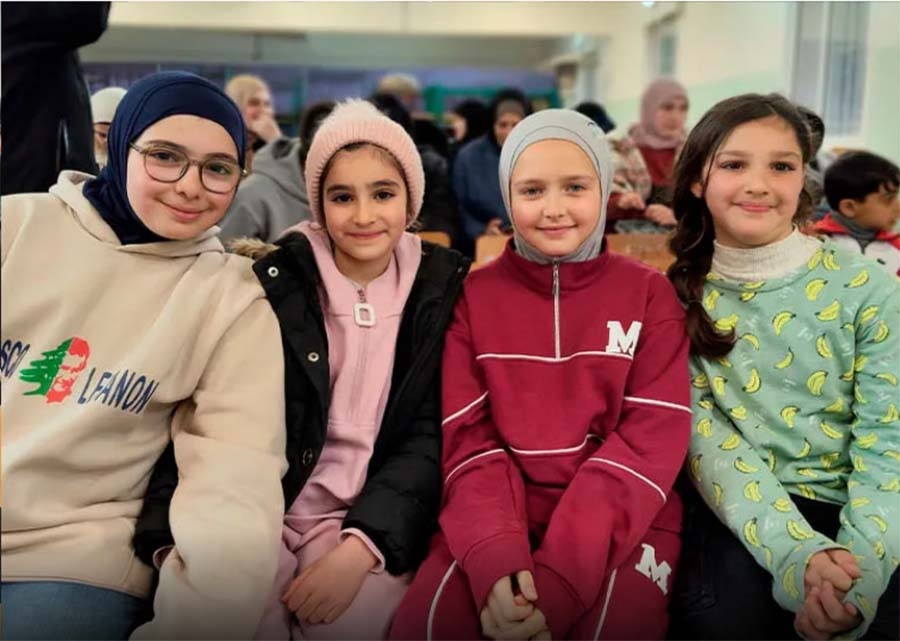
“Many children struggle to express their emotions, experiencing crying fits and constant fear after having lived through situations of violence,” say the Salesians in Lebanon. Through activities such as play, drawing or individual support, the teams try to help them regain their emotional stability.
Furthermore, they organise group sessions and safe spaces for women and minors, addressing situations of anxiety, trauma or even postnatal depression in contexts of extreme vulnerability.
The crisis is also having a direct impact on education: schools have been closed for many weeks and many educational facilities have been bombed or are now housing displaced people. But, in addition to this situation, the economic crisis means that many families cannot afford to educate their sons and daughters, which is leading to an increase in school dropout rates.
Responses looking to the future
MISIONES SALESIANAS, together with the Salesians, continues to adapt its response to a prolonged crisis, combining immediate humanitarian aid with sustainable initiatives. Food, shelter, education and emotional support form part of a comprehensive approach that seeks not only to respond to the emergency, but to provide opportunities for the future.
In the crisis in the Middle East, the presence of the Salesians is a sign of hope for thousands of people who strive every day to carry on in one of the most challenging contexts in the world.
Source: Misiones Salesianas