RMG – The Educative and Pastoral Project and the role of the delegate at the heart of the School for Provincial Youth Ministry Delegates
Wednesday 3 June began with the delegates attending the audience with Pope Leo in St Peter’s Square, a significant moment of ecclesial communion and renewed missionary zeal.
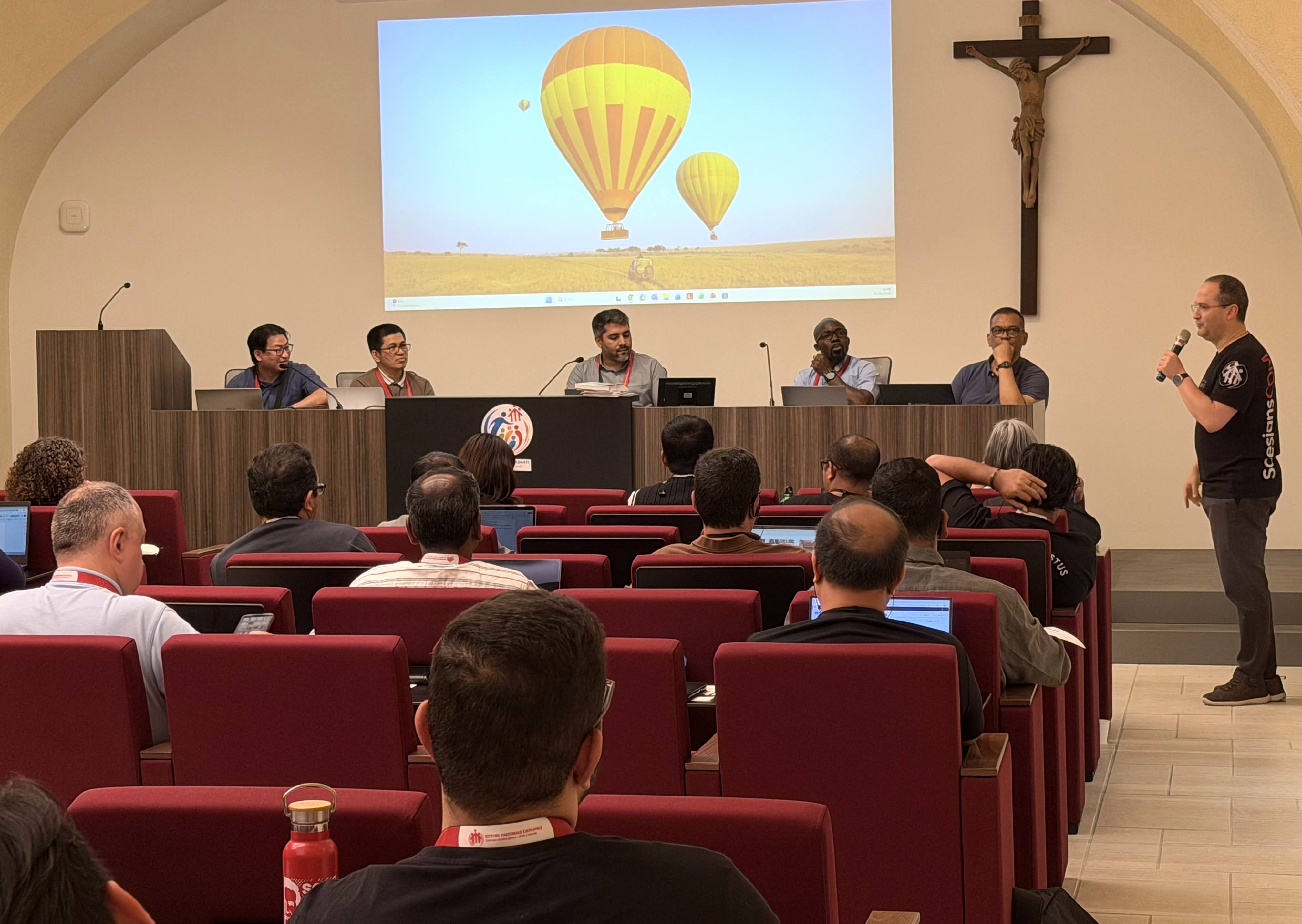
In the afternoon, the session was dedicated to pastoral environments, as presented in Chapter VII of the SYMFoR. In his introduction, Fr Rafael Bejarano, General Councillor for Youth Ministry, highlighted the link between the articles of the Salesian Constitutions relating to apostolic works and environments (Articles 40–44) and their operational application in the Frame of Reference.
Members of the central team of the Youth Ministry Sector presented the specific characteristics of the various pastoral fields, offering a comprehensive overview of Salesian works around the world. The session concluded with a time for sharing, during which participants expressed reflections and perspectives on possible developments and renewals of the works, in response to current challenges.
Thursday 4 June was instead dedicated to Chapter VI of the SYMFoR, with particular attention to the Salesian Educative and Pastoral Project (SEPP). In the first session, Fr Bejarano highlighted the breadth and richness of the SEPP, presenting it as a fundamental operational tool for the animation of the provinces.
In particular, it was highlighted how the SEPP, together with the Overall Provincial Plan (OPP), fosters the development of a project-oriented mindset, offering clear direction in educational and pastoral action. At the same time, attention was drawn to the risk of these documents overlapping with other tools or, conversely, of a lack of direction when they are not properly utilised.
The subsequent sessions were led by Fr Michal Vojtaš, lecturer in pedagogy at the Pontifical Salesian University (UPS) in Rome, who stimulated reflection on the need to promote authentic and urgent planning processes. His presentation highlighted how planning should not be limited to meeting formal requirements, but must arise from the ability to identify the real needs of young people and their contexts.
Among the points that emerged, the importance of authentic and consistent leadership was emphasised, capable of fostering constructive relationships and promoting deep reflection within the provinces.
The final session of the day was led by Fr Stefano Martoglio, Vicar of the Rector Major. In the light of the Magisterium and Salesian norms, he explored the role of the Youth Ministry Delegate in relation to the Provincial and the Provincial Council.
Addressing the participants, he emphasised strongly: “Your service, dear brothers, is central to the present of your provinces and to building the future. This centrality is exercised through collegiality, by building networks and attending to fundamental areas, in particular the relationship with the local Church, the life of the province and the educational-pastoral communities”.
The day concluded with the Eucharistic celebration, presided over by Fr Martoglio himself and concelebrated by Fr Vojtaš, a moment of spiritual synthesis of the journey undertaken.
In this atmosphere of deepening understanding and sharing, the participants continue to develop an increasingly conscious and integrated vision of the Salesian mission, aimed at responding with creativity and fidelity to the challenges of the contemporary world of young people.
wp-content/uploads/images/RMG - Scuola Delegati PG 5 2026