Italy – “The dream that changed a life”: from a nine year old’s dream to the discernment of a mission
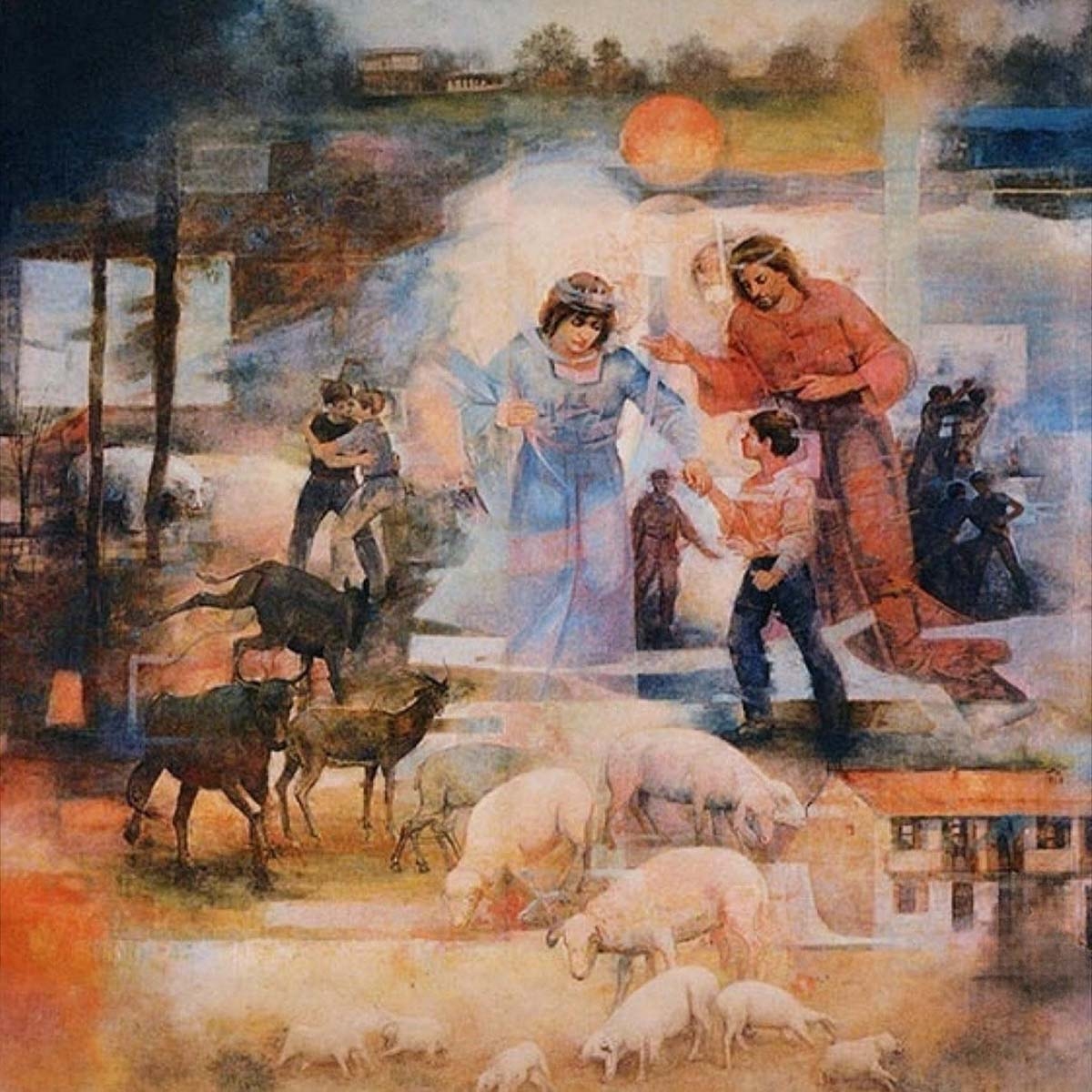
There are experiences which, even when lived in childhood, continue to guide an entire life. When John Bosco was about nine years old, he had a dream destined to mark the whole course of his existence. In a large open space, full of boys who were fighting and swearing, he tried to impose order with his fists and shouting, but a majestic Person and a Woman showed him another way: “Not with blows, but with gentleness and charity will you win these friends of yours. I will give you the Teacher, under whose guidance you will become wise.” That dream, later recalled in the Memoirs of the Oratory, was a kind of profession of faith in his vocation: God was calling him to dedicate his life to young people, especially the poorest and most neglected.
For years, John did not fully understand that message, but he carried it in his heart like a mysterious light. During his years in Chieri, while preparing for the priesthood, he began to sense that his path would pass through the joyful and Christian education of the young. Thus the Society of Joy was born: a small group of companions who committed themselves to living according to three simple rules—to say and do nothing that might offend a Christian, to fulfil their duties of study faithfully, and to be joyful. There John learned that the Gospel can be communicated through play, friendship, music and creativity, and that Christian joy is a true educational “method.”
The dream did not remain a private memory, but became a criterion for discernment. It was not an abstract idea, but a lens through which John learned to read his own story. Don Cafasso, his spiritual director, helped him interpret events in the light of that call: the choice of the ecclesiastical boarding house, contact with the youth prisons of Turin, and encounters with the first poor boys who “made a racket” around him. When Don Bosco later reread his own life in the Memoirs, he highlighted precisely these turning points: the dream, his formative years in Chieri, his encounters with young prisoners, and the birth of the Oratory. Each stage appears as a progressive response to the “programme” he had received as a child.
The Salesian tradition has seen in that dream not merely a moving episode, but the manifesto of the charism: a mission to young people lived with gentleness and kindness, united with solid human and Christian formation. Recent studies have emphasised its vocational significance: it is a dream that recurs several times in Don Bosco’s life and guides his decisions, even in moments of crisis, as extensive reflections on the “vocation‑mission dream” and its recurrences have shown. The dream, therefore, is not an escape from reality, but a profound reading of reality in the light of the Gospel.
For those who today live or accompany a vocation, the story of the nine‑year‑old’s dream is an invitation to believe that God truly speaks in concrete life: in desires, encounters, wounds and talents. Don Bosco teaches that God’s will is not discovered in the abstract, but by getting involved—studying, working, serving and building good relationships. Like him, we can learn to recognise in our deepest “dreams”—those that are good for others and not only for ourselves—the trace of a calling: a voice that asks us to dedicate our lives to making the world a little more human and a little more holy, starting with young people, as Don Bosco did, without yet knowing where that dream would lead him.