The earliest photographs of Don Bosco are striking in their realism and simplicity. They present the historical figure: a priest shaped by tireless work, a penetrating gaze, and a deeply fatherly presence. These images root devotion in reality, reminding us that Don Bosco was not a figure born of legend or idealization, but a man of flesh and blood who walked the streets of Turin alongside young people.
The traditional images that followed played a decisive role in shaping the collective memory of Don Bosco across generations. Often portraying him with a gentle smile and surrounded by boys, they highlighted his kindness, warmth, and pastoral heart. Through these images, his mission spread across continents, making his face familiar in schools, parishes, and oratories, and communicating his spirit in ways that words alone could not.
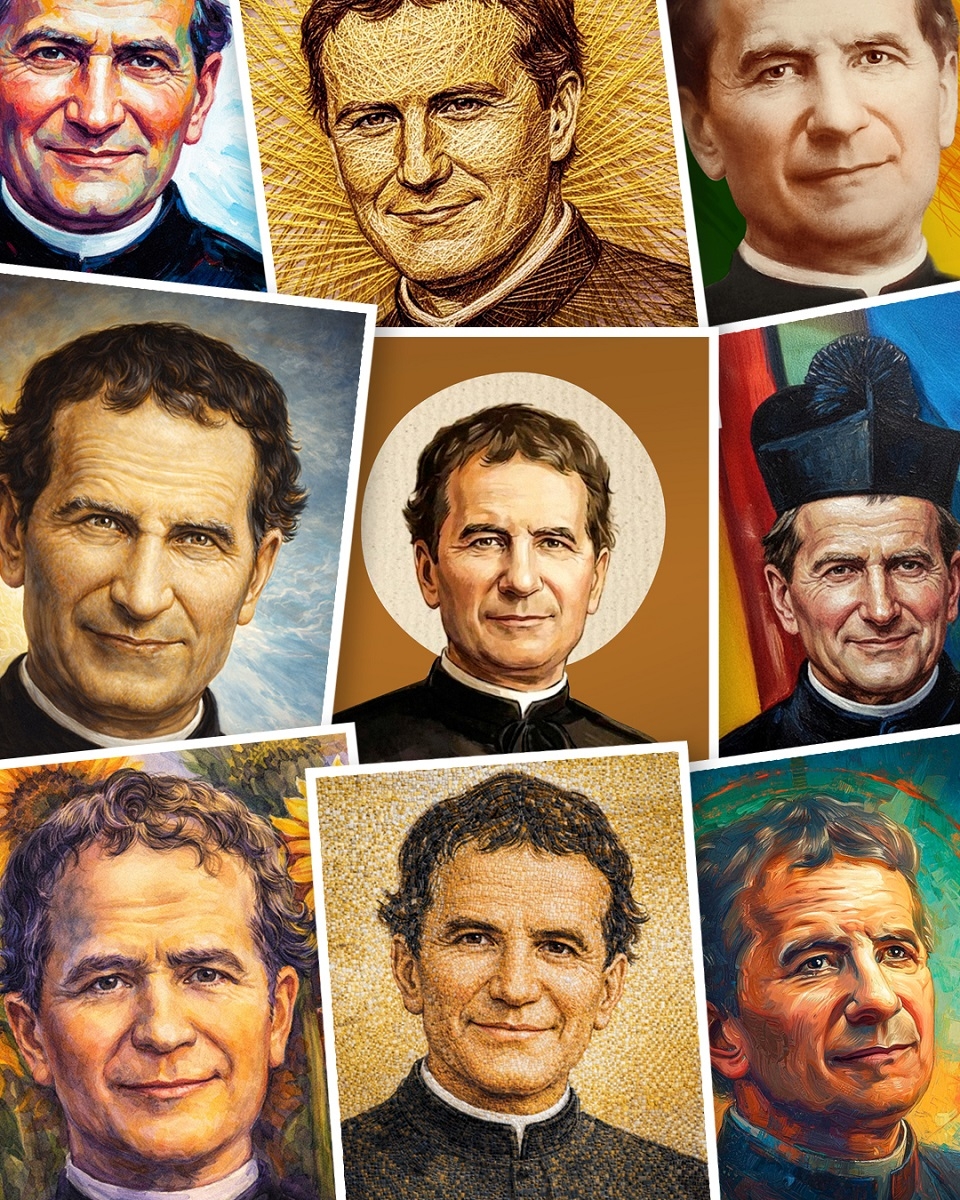
Modern artistic interpretations open a further perspective. Through color, symbolism, movement, and emotion, contemporary artists reinterpret Don Bosco for today’s world. Each image reflects not only the saint, but also the personal experience and inner vision of the artist—revealing how Don Bosco’s passion for young people remains vibrant and relevant. In these works, he appears dynamic, approachable, and profoundly human: a saint who belongs not only to history, but to the present and the future.
Images possess a unique power to inspire. They transcend language and culture, speak directly to the heart, and awaken admiration and imitation. Behind every image of Don Bosco stands the same figure: a father full of kindness, optimism, creativity, unwavering trust in God, and lifelong dedication to the young, especially the poorest and most vulnerable.
In this spirit, the Social Communication sector has made these images widely accessible through on the Google Drive, inviting Salesian communities, institutions, and Salesian digital platforms around the world to use them creatively. The hope is that these images will help young people encounter Don Bosco not as a distant historical figure, but as a friend, father, and guide—someone who understands their lives and speaks their language.
The visual heritage has to be seen more than a decoration. It should be seen as a powerful tool for evangelization, education, and memory: a silent yet eloquent witness capable of inspiring generations to come and helping young people fall in love with Don Bosco, the saint of the young, and with the dream he entrusted to the Church and the world.
A word of sincere gratitude is extended to all the artists who have created these images, paintings, and designs. Through their inspiration and creativity, they have helped shape the visual memory of Don Bosco and continue to inspire generations by keeping his spirit and mission alive.