Italy – Two perspectives from Asia on hope after the Jubilee
Below is the full article:
The Gospel and works of mercy can reach people in the Asian context if they are based on the demonstration of a recognisable human value and are not necessarily aimed at proselytism. For this reason, the Catholic missionary world is convinced that human promotion is the duty of evangelisation, which must meet the concrete needs of peoples. It is no coincidence that the key elements of the mission in those contexts are women and men who offer services in various professional fields (teaching, education, healthcare, welcoming marginalised people): lay people, volunteers and consecrated persons who profess their faith through their work. This method is perfectly in line with Salesian attitudes, including a certain reluctance to verbalise the undertakings that their charism drives them to accomplish.
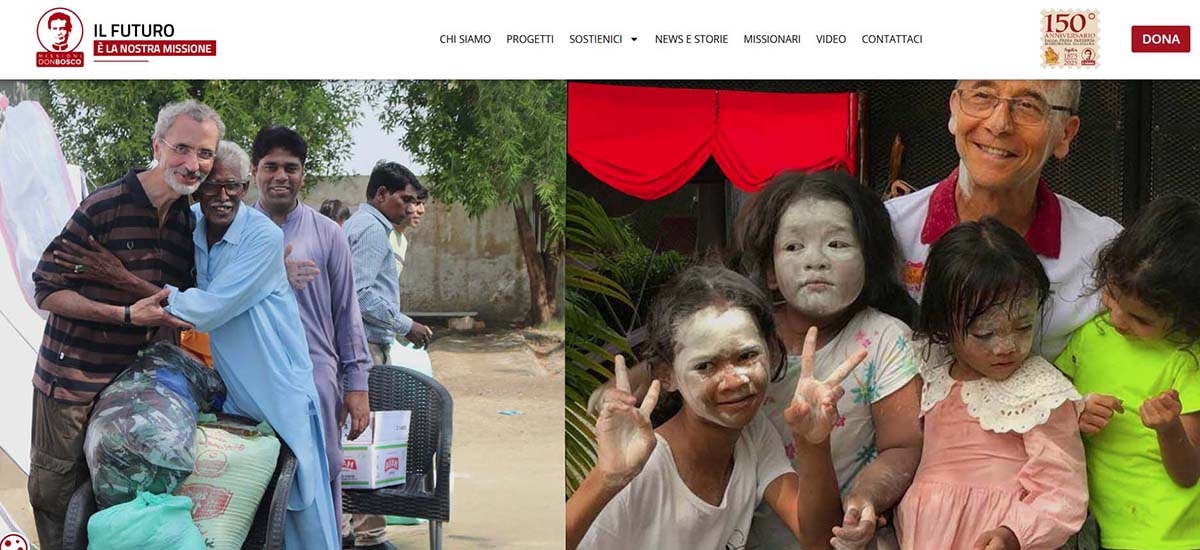
‘Hope in Pakistan means youth,’ writes Piero Ramello. It is the context that shapes the service he went to support six years ago at the Salesian school in Lahore. ‘Half of the large population is in the 0-21 age group,’ he points out. He is in a position to observe from a privileged perspective and knows how to grasp the richness of each generation entering the world. This is how he perceives in young Pakistanis a sense of vitality, future, and optimism. Hope has their face, their condition, their expectations. While as a teacher he imparts lessons in mathematics and physical sciences, as a leader in the oratory he gives his time to listen, to play, to follow the human growth of those who can improve the world. In this he is helped by music, his passion, which has become an additional reason for gathering in the classrooms of his institute. And the melody of the notes accompanies the curiosity to explore the unknown. ‘A variation of hope is spiritual depth,’ Ramello emphasises.
From Cambodia, Roberto Panetto has given us some reflections that are ‘a message from the heart after the Lord’s gift of 50 years of missionary life.’ He begins with a truly encouraging reassurance: ‘Hope is not the last to die, as the proverb says: not because it dies earlier than we proverbially say, but because it never dies,’ and continues with a series of ‘maxims’ that we offer to our readers, allowing them to blend together in a sort of meditation:
‘Hope is the virtue that accompanies us at the most important moment of our existence: when we pass from human life to the wonderful embrace of God. What could be more beautiful than seeing in this meeting of ours seeds of hope that will undoubtedly bear good fruit. Let us always leave the door of our hearts open. A good morning, a smile, a child’s hug, a kindness that makes us happy to live and instils so much hope that good will triumph over evil. Hope and peace begin in our hearts and in our families.‘
In ’his’ mission at the Don Bosco Technical School in Sihanoukville, Panetto has won the trust of the authorities and, above all, of families and students. Hope has the face of young people learning a trade that they can practise in their own country, and more than one generation can already testify to this.
Source: Missioni Don Bosco