Zambia – A Telephone Booth Is Not a Home: From the Street to Hope in Makululu
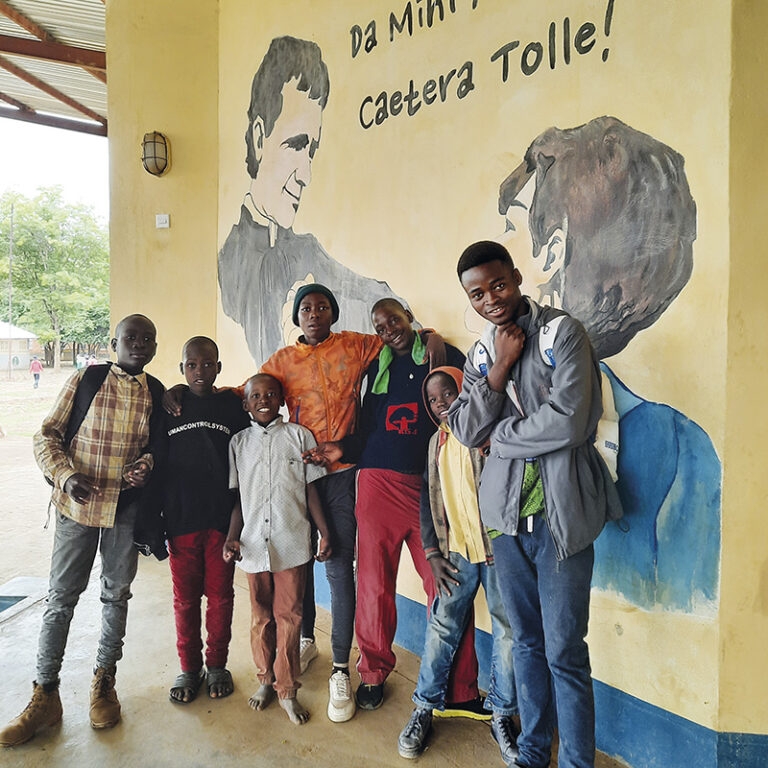
Ciloto 1 – A First Step Toward Stability and Trust
“Ciloto” is not a large institution or a closed orphanage. It is a home—a first stage on the journey—where the boys can pause, regain balance, and begin rebuilding their lives. It is a process of formation and education that gradually prepares them for return to their families or reintegration into the community.
The Salesians, together with lay collaborators, provide a safe place to live, regular meals, access to clean water, and basic medical care that often saves health and sometimes even life. At the same time, an educational path begins, deeply rooted in the Preventive System of Saint John Bosco. The children are not judged for their past but accepted as they are, with all their fears and mistrust. Daily life—study, responsibilities, work, sports, and rest—restores order and security to those who once knew only the chaos of the street. Conflicts are discussed rather than punished; mistakes become opportunities to learn rather than reasons for rejection.
The most powerful educational tool is the steady and coherent presence of a caring adult. Many boys struggle with addiction, often to glue. Here, addiction is not an identity but a wound to be healed. Recovery includes medical care, constant guidance, and a structured routine that helps restore self-control. There are relapses and returns to the street, yet experience shows that once a child has known the safety of a true home and the faithfulness of adults, the memory of that goodness remains within him.
Ciloto 2 – Rehabilitation, Care, and Inner Healing
As the needs of the boys became more complex—marked by trauma, addiction, and the deep scars of street life—a second center, “Ciloto 2,” was created. It serves as a rehabilitation and support facility for those requiring specialized care. Here, the daily and constant presence of educators, together with professional psychological support, creates a space for gradual healing that demands patience and gentle accompaniment.
Closely connected to the center is a farm that has become not only a workplace but also a place of inner renewal. Its aim is self-sufficiency and care for Creation, using solar energy and biogas while teaching responsible stewardship of the earth’s gifts. The farm includes pig breeding, food production, fishponds serving both the house and the local community, fields of corn, soybeans, and sunflowers, as well as an orchard and an area for laying hens. Even small participation in farm work is part of the rehabilitation process: contact with the soil, simple repeated tasks, and patiently awaiting the harvest teach that life—like a seed—requires time, care, and fidelity in order to grow.
Reintegration – The Path Toward a New Beginning
Ciloto is not the final destination but a stage along the journey. Whenever possible, the Salesians patiently search for families, often in remote areas of Zambia, to prepare the conditions for a safe return. Reintegration into the family or local community—sometimes accompanied by placement in other structures—is among the most meaningful outcomes of this mission.
Since the foundation of the Children’s House, 243 boys have received support, and 142 have already returned to their families or communities. There are also interrupted journeys and difficult returns to the street. These numbers are not statistics of success or failure but traces of real, often painful stories still in progress—stories where the presence of caring adults continues to generate hope.
To understand better, a documentary titled: “Ciloto-Saved from the Streets” is available online here