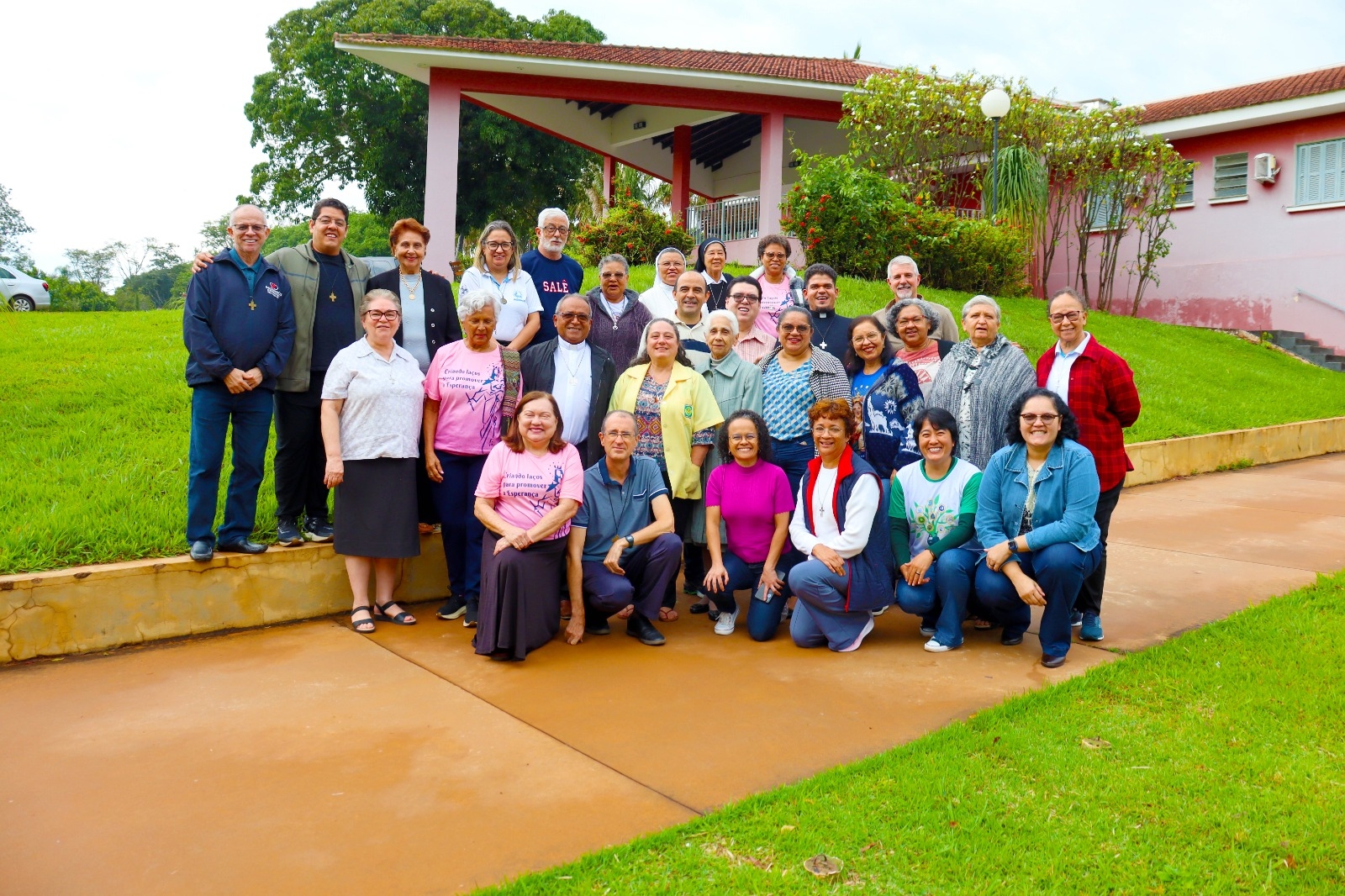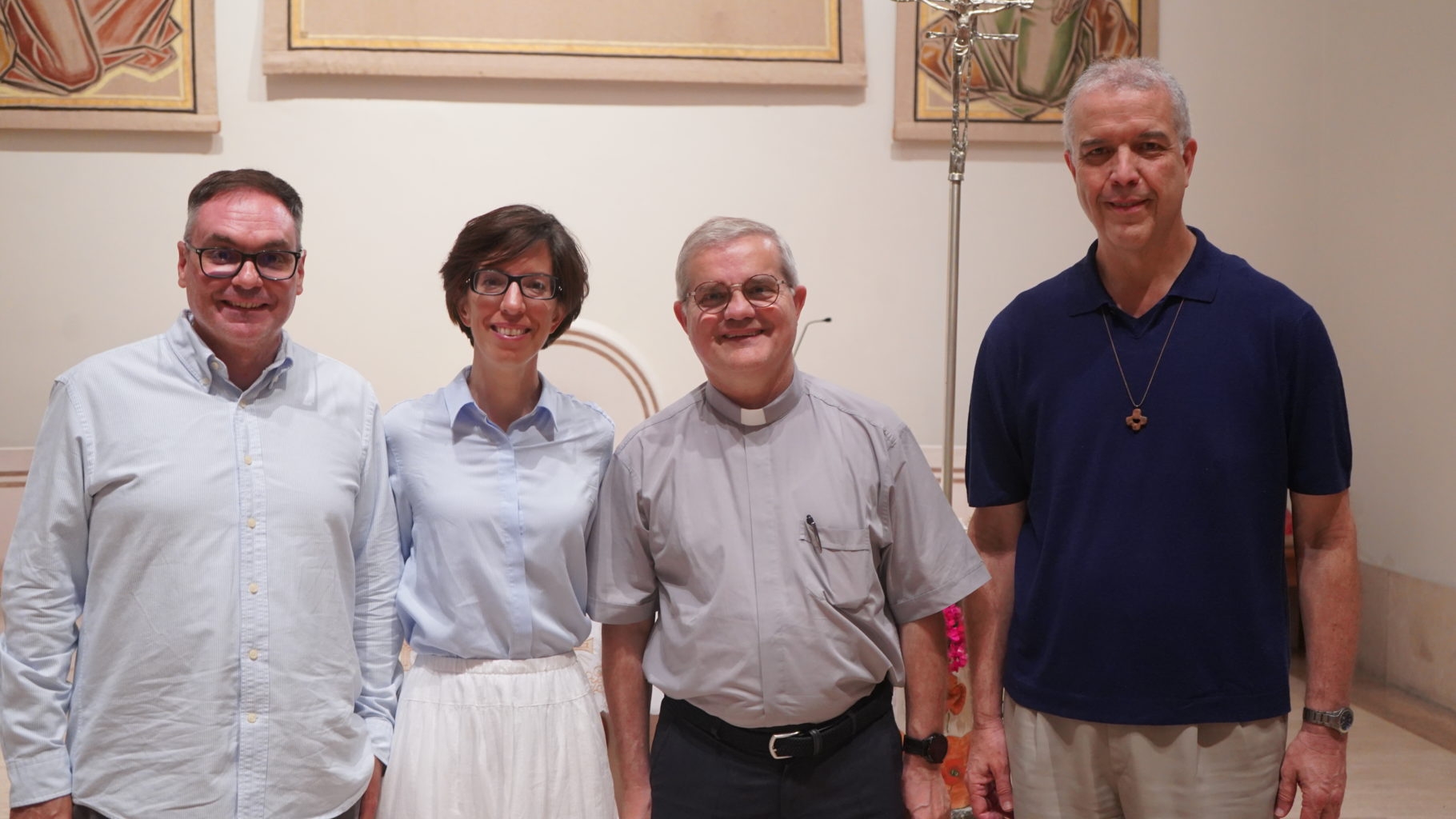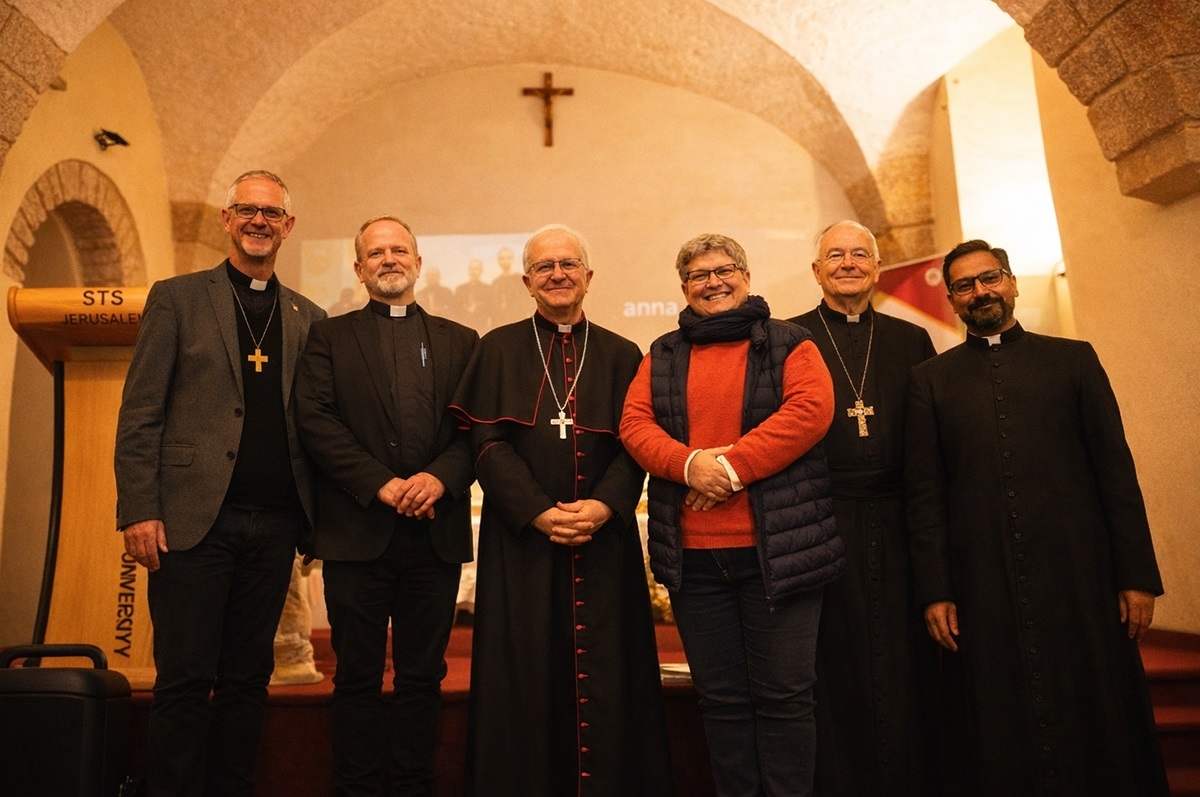
The event, in keeping with the Faculty’s tradition, was marked by involvment of representatives from the various churches in Jerusalem, gathered to reflect on the importance of the Council as a bond of unity for Christian communities, and was attended by Bishops William Shomali, Vicar for Jerusalem and Palestine, and Giacinto Marcuzzo, Bishop Emeritus of the Latin Patriarchate of Jerusalem.
Father David M. Neuhaus SJ, a lecturer at the Salesian Faculty of Theology, delivered a paper on Council, Creed and Canon. The Role of Nicaea in the Development of the Biblical Canon, examining the interactions between Emperor Constantine, Eusebius of Caesarea and Athanasius of Alexandria, “particularly significant figures in this debate”, and specifically on the order for fifty Bibles that Constantine requested from Bishop Eusebius “to be written on parchment prepared in a legible manner, and in a convenient and portable form.”
Archimandrite Christodoulos, abbot of the Greek Orthodox Monastery of the Holy Cross in Jerusalem, reflected on The Spiritual Vision of Nicaea: worship, prayer and confession, concluding his address by stating that “divine grace does not allow the members of Christ to be torn apart, but calls all to unity on the foundation of the one faith and within the common Eucharistic life of the Church.”
Marie-Armelle Beaulieu, editor-in-chief of Terresainte.net, presented the contribution of the Palestinian bishops present at the Council – no fewer than 18 – providing a broad overview of the Palestinian Church of the 4th century AD, focusing in particular on Macarius of Jerusalem, the principal architect of the construction of the Basilica of the Holy Sepulchre, venerated as a saint in both the East and the West.
Canon Richard Sewell, of the Anglican Communion, stating his desire to bring “an inclusive Anglican perspective”, reflected on Nicaea as the foundation of Christian unity today, asserting decisively that “if anything can save us, and the whole Church, from the lack of faith that is our decisions; it is the founding document of the Church’s original unity, which is none other than the Nicene-Constantinopolitan Creed”.
On the sidelines of the event, there was a presentation of the volume Nicaea I in 1700: Remembering the Council and Renewing the Faith, an anthology edited by Prof. Vincent Bosco SDB, lecturer at the Jerusalem Campus of the UPS Faculty of Theology; and Prof. Stanley Jayakumar Yesudass SDB, lecturer at the Don Bosco Theological Centre in Chennai, India. The book brings together contributions from around a dozen scholars who explore the legacy of the Council from various perspectives, and is the result of a process of research and collaboration between the two study centres and their lecturers.
In addition to the content presented and shared during the symposium, the very organisation of the event held a specific value in itself: “In recent weeks we wondered whether we should postpone the event until calmer times, but then we told ourselves that perhaps today, in the midst of a difficult and worrying historical situation, amidst winds of war that seek only to exacerbate divisions, this seminar would be our simple contribution to reminding everyone that, in order to give our communities a future of peace, it is essential to start from what unites us, looking to our shared roots, and setting aside, for a moment, the elements that seem to divide us,” explained the organisers of the initiative.
{gallery}Gerusalemme – Evento Nicea 2026{/gallery}