Democratic Republic of the Congo – Interview with Father Guillermo Basañes, Provincial of the Central Africa Province (AFC)
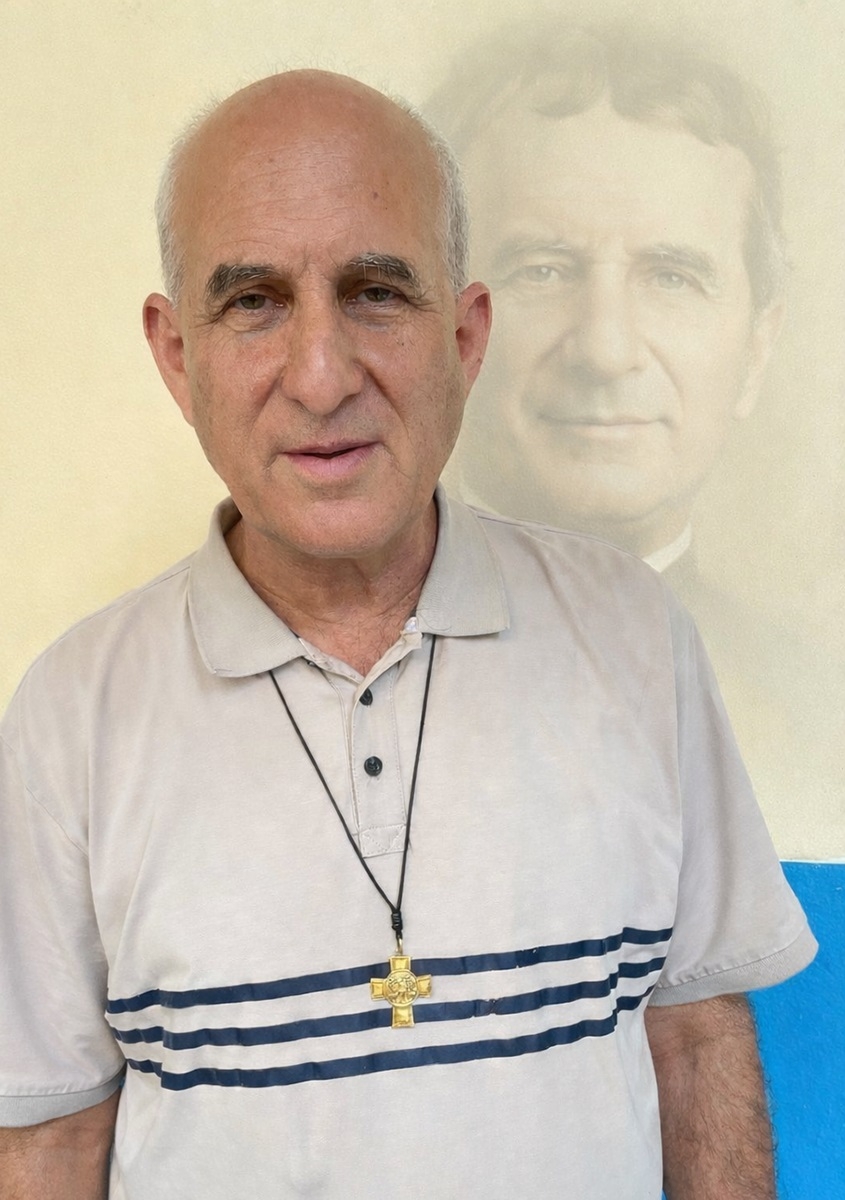
Father Provincial, as your six-year term at the head of the Central Africa Province of Mary of the Assumption draws to a close, how do you view this mandate?
In reality, I am currently five years and two months into my term, so I still have a good part of the final year left to conclude this mission.
The Congregation and I look upon the AFC Province with a great sense of gratitude. It is a province I like to compare to an elderly and fruitful mother who is in the process of giving birth to her third child. She has already given birth to other provinces (AGL, ACC) and is now continuing to bring forth the ACE Province.
My main feeling, therefore, is one of deep gratitude for all that God, through Don Bosco, continues to accomplish through the AFC Province. I give particular thanks for the gift of consecrated vocations and within the Salesian Family.
There are also visible signs of this expansion: the creation of new provinces, the new Salesian presence in Kalemie, the establishment of the first Salesian university in Africa, the Don Bosco University in Lubumbashi, and the consolidation of the Afia Don Bosco Polyclinic in Lubumbashi, currently undergoing renovation. All these elements are signs of a vibrant and evolving province.
Your term of office took place in a context that was at times complex. What were the major challenges you had to face?
When the Rector Major sent me to this province, the great challenge was building provincial fraternity and, above all, pursuing reconciliation. We therefore had to ‘mend’ the fraternity, that is, work towards reconciliation. That was the main task I had been given: to ensure reconciliation within the province.
For if there is no peace, harmony and synergy among the apostles, the whole mission of the Church falls apart. The Church’s primary mission is its unity. Jesus himself prayed: “May they all be one” (John 17). Without unity, the Church can do nothing. This is the main challenge I received in 2021.
Despite these challenges, how did you manage to preserve and foster the spirit of Don Bosco in the various Salesian communities of the province?
Through ordinary means. I don’t think I invented anything, because the Holy Spirit had already inspired everything in Don Bosco. For example, a very important tool I relied on was the provincial visitations. I had to visit 26 communities and around 260 to 270 Salesians. The Congregation simply asked me to carry out the provincial visitations well, and that is what I have tried to do over the years. I have simply tried to be Don Bosco and to do what the Congregation asks of me.
The creation of the Saint Joseph Vice-Province of East Congo-Africa marks an important turning point. How do you interpret this event for the future of the Salesian mission in eastern DRC?
The first interpretation is that God does not abandon his people through his Church. This is the most astonishing realisation, because from a human perspective, this is not the time to launch a new venture in a region like North Kivu where many organisations are leaving. And yet God does the opposite: where everyone else is leaving, He is settling in. The creation of this new province, at a historically difficult time, is therefore a sign that God does not abandon His people.
Secondly, it means that there is still a great mission of Don Bosco to be accomplished in this region. The new province is not created merely to reinforce what already exists, but to become a missionary platform.
Today, the Salesian presence in the east of the DRC is limited to just three major cities such as Bukavu, Goma and Uvira, but there are still many places to evangelise and serve: Beni, Butembo, Isangi, Kisangani, Kindu, etc. The future for the expansion of this province is therefore very promising.
It is therefore not necessary to wait until there are fifteen communities to create a province. On this point, thinking of my successor here, I might say with a touch of humour: ‘You’ll have almost nothing to do! ’ Indeed, I am currently Provincial of a province comprising 26 communities and nearly 300 confreres, whilst he will be at the head of a more modest entity, with around eight communities and some forty or fifty confreres. One might think he will have more rest.
But in reality, the opposite is true. This decision by the Rector Major is part of a development strategy: the aim is to create a more flexible structure, capable of becoming a starting point, a missionary base destined to expand gradually.
Thus, far from being a downsizing, this new configuration is an opportunity: the chance to lay the foundations of a province in the making, focused on expansion and the future of the Salesian mission.
What hopes do you place in this new ecclesial and educational reality set to develop in the east of the country?
The main hope is, first and foremost, spiritual. The number one Salesian hope is young people, especially poor and vulnerable young people. Where there are poor young people, there is a future for the Salesian mission.
There is also a real hope for vocations: the number of vocations in this region is very encouraging.
Finally, there is also hope for economic development, particularly in the fields of agriculture and livestock farming.
What role are lay people called to play in strengthening the educational and pastoral mission in the new province?
The Congregation places great emphasis today on the active role of lay people in the Salesian mission. Lay people must be active participants with a clear identity: understanding the Salesian mission, knowing Don Bosco’s spirituality, living out his pedagogy, and possessing creativity, autonomy and freedom.
Lay people must not think that they must always be behind the priests: lay people must be able to initiate works, activities and services for young people, even before the Salesians arrive in certain places.
What message would you like to convey to the entire Salesian family of the AFC and particularly to the young people?
My final message to young people, to lay people and to the whole Salesian family is simple; it is the message of the Church, of Jesus and of Don Bosco: Be holy, remain holy.