Brazil – The Salesian Province of Campo Grande (BCG) opens its Historical Memorial
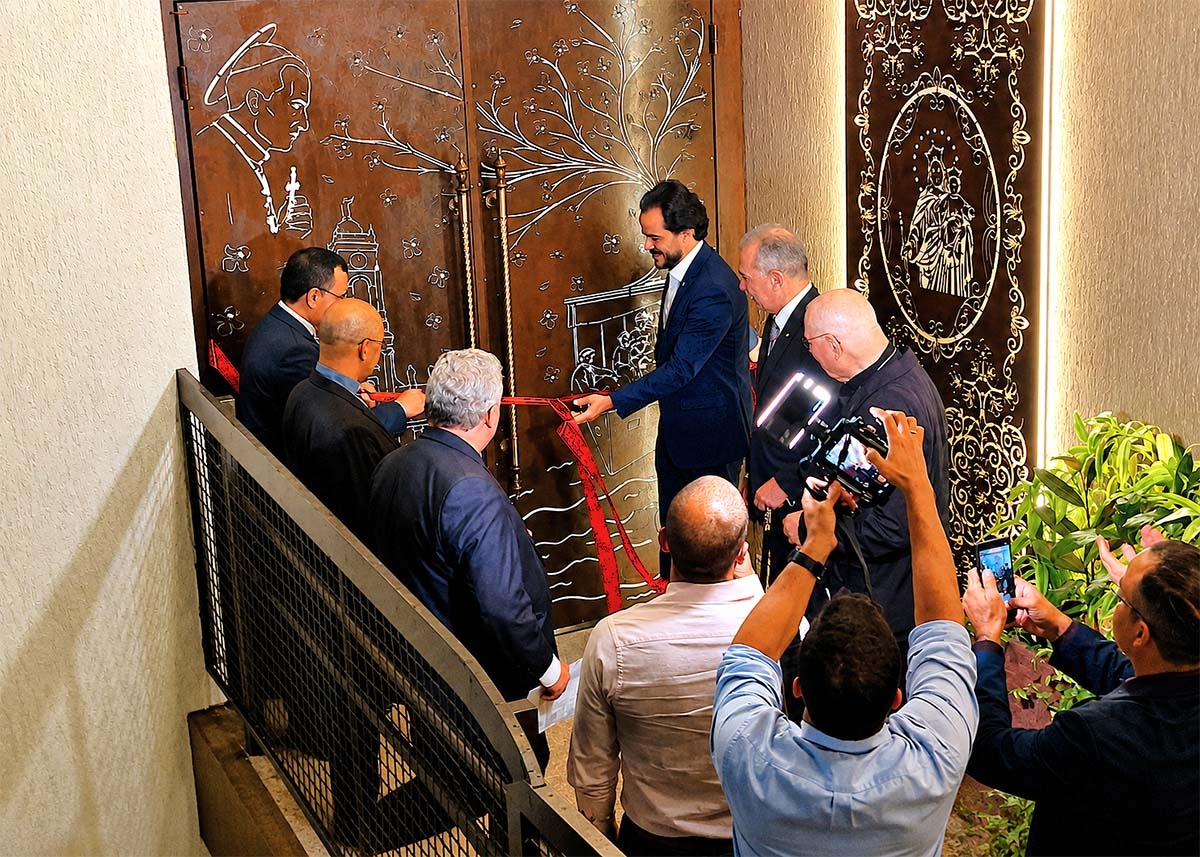
An evening bridging past and present
The opening ceremony brought together Salesians from the states of Mato Grosso, Mato Grosso do Sul and São Paulo. Three bishops took part in the event — Bishop Dimas Lara, Bishop Vitório Pavanelo and Bishop Vartan Bogossian — alongside the Rectors of UCDB, the Federal University of Mato Grosso do Sul (UFMS) and UniSALESIANO. Also present were Vice-Chancellors, members of the State Parliament and representatives of the State Governor and the Mayor of Campo Grande. An evening where history sat down at the table with the present.
An education that has left its mark in the heart of central Brazil
The Provincial of the Campo Grande Brazil (BCG) Province, Fr Adalberto Alves de Jesus, opened the proceedings with words that resonated throughout the hall. He recalled that the objects on display are not mere museum pieces: they are living testimonies of “an education that humanises, a presence that welcomes and a faith that brings about concrete works”. Every display case, every photograph, every instrument bears the gentle weight of a history built with the hands.
A project born of the desire not to forget
The curator of the Memorial is the Vice-Provincial, Fr Ademir Lima de Oliveira, who has led the project for over a year. The idea originated with the previous Provincial, Fr Ricardo Carlos, who was determined to ensure that over 130 years of Salesian presence in central Brazil would not be lost to oblivion. The Memorial is the concrete response to that desire. During the opening ceremony, it was Archbishop Vitório Pavanelo, SDB, Archbishop Emeritus of Campo Grande, who imparted the opening blessing for the new space.
Thematic sections that tell stories greater than the space they occupy
The exhibition is organised into thematic areas. The first houses a rare treasure: the first printing press in Mato Grosso, run by the Salesians since 1894. That printing press is central to the history of regional communication: it printed words at a time when words were scarce and precious.
A second section preserves the heritage of the old Vocational Schools, with tools and documents from the carpentry, printing, tailoring and shoemaking workshops. These spaces trained generations of young people in trades that time has made increasingly rare. The tools on display still retain the scent of work and dignity.
A third section is dedicated to the Indigenous Missions. Documents, photographs and objects recount the Salesian presence along the Araguaia, Xingu and das Mortes rivers — testimonies of encounters between different cultures, of courageous choices, of long journeys and of rivers that never cease to flow.
The “Education for Life” room concludes the exhibition with a timeline stretching from the first oratories to the Mission’s contemporary educational projects. It is the thread that weaves yesterday and today together without leaving any knots in sight.
Relics, faith and the stuff of which saints are made
The Memorial also houses first- and second-class relics of Salesian saints — objects of devotion considered sacred by the Catholic Church, which fill the space with a silent yet powerful presence.
Memory as a commitment to today’s youth
Fr Ademir Lima de Oliveira clearly summed up the purpose of the place: “We do not keep these objects out of nostalgia. We keep them because they show that Don Bosco’s method has been working here for 130 years.” And he touched on the heart of the mission: “This Memorial aims to tell today’s youth: you are part of a greater story.”
A Congregation that has put down roots to stay
Founded in 1894, the Salesian Mission of Mato Grosso is one of the oldest religious and educational presences in central Brazil. Over the course of more than a century, the Salesians have built schools, opened parishes, established social works and walked alongside the indigenous peoples of Mato Grosso and Mato Grosso do Sul. They arrived and stayed. They stayed and put down roots.
The Provincial stated that the opening of the space to the public: “represents, for the history of the Salesian Mission of Mato Grosso, the legacy of so many Salesians who have passed through here and dedicated themselves to the education of young people and the evangelisation of indigenous peoples. May these images that we shall contemplate with our own eyes serve as a reminder of the past, the importance of the present, and the future that lies ahead for young people”.
How to visit the Memorial
The Memorial of the Salesian Mission of Mato Grosso opens to the public from 20 May. Admission is free. The space is located at the organisation’s headquarters, on the central campus of UCDB, in Campo Grande. Groups and individual visitors can book by emailing memorial@missaosalesiana.org.br. History awaits — and has much to tell.