Italy – Safeguarding humanity in the age of Artificial Intelligence. Fr Francesco Preite revitalises the educational mission of Salesians for Social
We live in an age where technology is advancing faster than our collective ability to understand its consequences. Artificial intelligence, digitalisation and algorithms are transforming work, relationships, education, communication and even the way we perceive ourselves. It is within this epochal change that Pope Leo XIV, in his encyclical Magnifica Humanitas, poses a decisive question to the Church and the world: what concept of the human person do we wish to preserve in the age of artificial intelligence?
The encyclical immediately sets out what is at stake: “the magnificent humanity created by God now faces a decisive choice: to erect a new Tower of Babel or to build the holy city, where God and humanity dwell together”. This is not an abstract reflection on technology. It is a vision that calls upon educational communities, institutions, the third sector and the Church to safeguard the human dimension amidst the transformations of the present, pointing to a clear direction for the future.
For this reason, Salesians for Social recognises in Magnifica Humanitas a trajectory deeply aligned with its own educational and social mission.
“Safeguarding the human and organising hope”
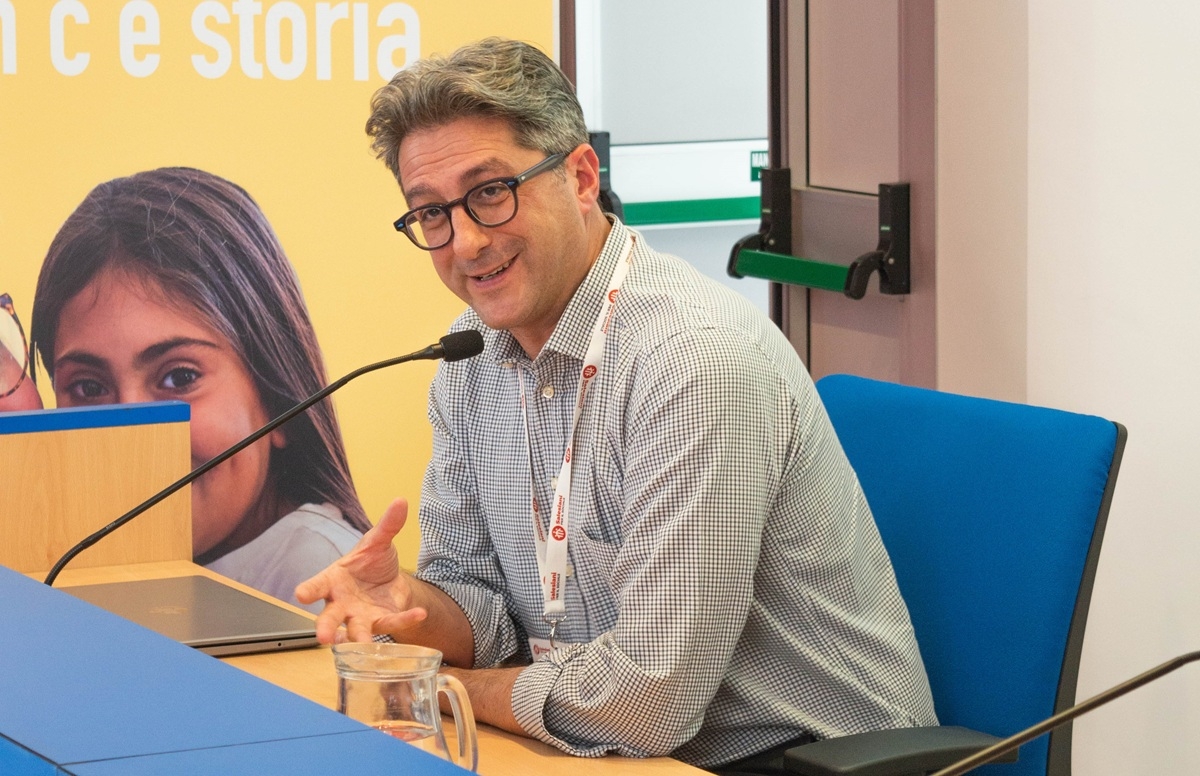
Pope Leo XIV’s reflection finds a profound echo in the daily commitment of Salesian social works. This is emphasised by Fr Francesco Preite, national president of Salesians for Social Action:
“Pope Leo XIV’s encyclical Magnifica Humanitas offers the Church and society a necessary word on the times we are living in. Artificial intelligence and new technologies are not merely technical tools: they affect people’s lives, education, work, freedom, relationships and the quality of democracy. As Salesians for Social – APS Association Network, we accept this call as an educational and public responsibility. Digital transformation can open up new opportunities, but it can also lead to exclusion, addiction, inequality and new forms of marginalisation, especially for the most vulnerable children and young people.
For this reason, we feel a duty to promote a humane, ethical and responsible use of innovation, focused on human dignity, the protection of minors, the common good and social justice. To educate today also means accompanying young people so that they remain free, critical and active participants within the digital transformation. In the spirit of Don Bosco’s charism, we wish to continue standing alongside young people not only in the familiar forms of poverty, but also in the new vulnerabilities brought about by technological change. The challenge of artificial intelligence calls upon educational communities, institutions, the third sector and the Church to form a new educational alliance, capable of safeguarding the human and fostering hope.”
An educational presence alongside the most vulnerable children
Today, the national network of Salesians for social work comprises 33 family homes, 45 day centres, and hundreds of social works and educational projects spread from the north to the south of the country.
Places where, every day, thousands of children find adults capable of accompanying, supporting and safeguarding their growth. It is a mission that springs from the heart of Don Bosco’s charism.
Don Bosco understood, before many others, that the most vulnerable young people do not merely seek assistance, but relationships capable of generating trust, dignity and a future. Today, in the age of artificial intelligence, that same educational insight continues to illuminate the present.
New forms of educational poverty in the digital age
Educational poverty today no longer simply means a lack of access to schooling or culture. It also means being excluded from the skills needed to engage critically with the digital world, growing up within increasingly fragile relationships, and being exposed to technological addiction, algorithmic manipulation, social loneliness and isolation. Above all, it means running the risk of being reduced to data, performance metrics and numbers. This is why the encyclical insists that ‘more powerful does not necessarily mean better’. The decisive criterion remains the dignity of the person.
And it is precisely here that the educational mission of Salesians for Social Justice deeply resonates with the teaching of Pope Leo XIV.
No algorithm can replace an educational relationship
Every day, Salesians for Social works to safeguard what no technology can ever replace: the educational relationship.
The encyclical states this clearly: “so-called artificial intelligences do not experience life, do not possess a body, do not experience joy and pain, do not know from within what love, work and responsibility mean”.
For this reason, the educational challenge of the present cannot be limited to technological literacy. We must guide young people to remain human amidst the digital transformation, helping them to become free, aware, critical individuals capable of living with technology without becoming its prisoners.
Educating communities so that no one is left behind
Pope Leo XIV warns of the risk of a society in which “effectively entrusting an algorithm with the power to select who deserves and who does not means redefining the boundaries of human possibility”. This is a decisive step. Because in the educational and social peripheries that Salesians for Social Action encounter every day, the risk of exclusion is not theoretical. It is real and concerns access to education, work, participation and rights. Safeguarding the human today means building educational communities capable of leaving no one behind, promoting alliances between schools, the third sector, families, institutions and the Church, and creating spaces where children and young people can experience being listened to, participation and a future. It means continuing to be present in the country’s most vulnerable areas with a concrete, daily and competent educational presence.
Educating for freedom in the age of artificial intelligence
Salesians for Social Action views new technologies and artificial intelligence not with fear, but with educational discernment.
For Salesians for Social, educating therefore means helping young people to develop critical thinking, responsibility and the capacity for discernment, accompanying them to become protagonists of their own lives and informed citizens.
Builders of communion in the age of AI
The expression chosen by Pope Leo XIV to conclude the encyclical seems to speak directly to the Salesian educational mission as well: to be “builders of communion, not architects of Babel”. In an age that risks confusing speed and progress, connection and relationship, efficiency and dignity, Salesians for Social Justice continues to choose to stand alongside the most vulnerable young people to safeguard what truly makes the future human. For technology may transform the world, but only authentic relationships, educational communities and shared responsibility can transform people’s lives. And it is every time a vulnerable young person is welcomed, listened to and supported that Don Bosco’s educational vision continues to be lived out, even in the age of artificial intelligence.