Costa Rica – “Everything for my King and my Queen”. Blessed Sister Maria Romero Meneses, FMA
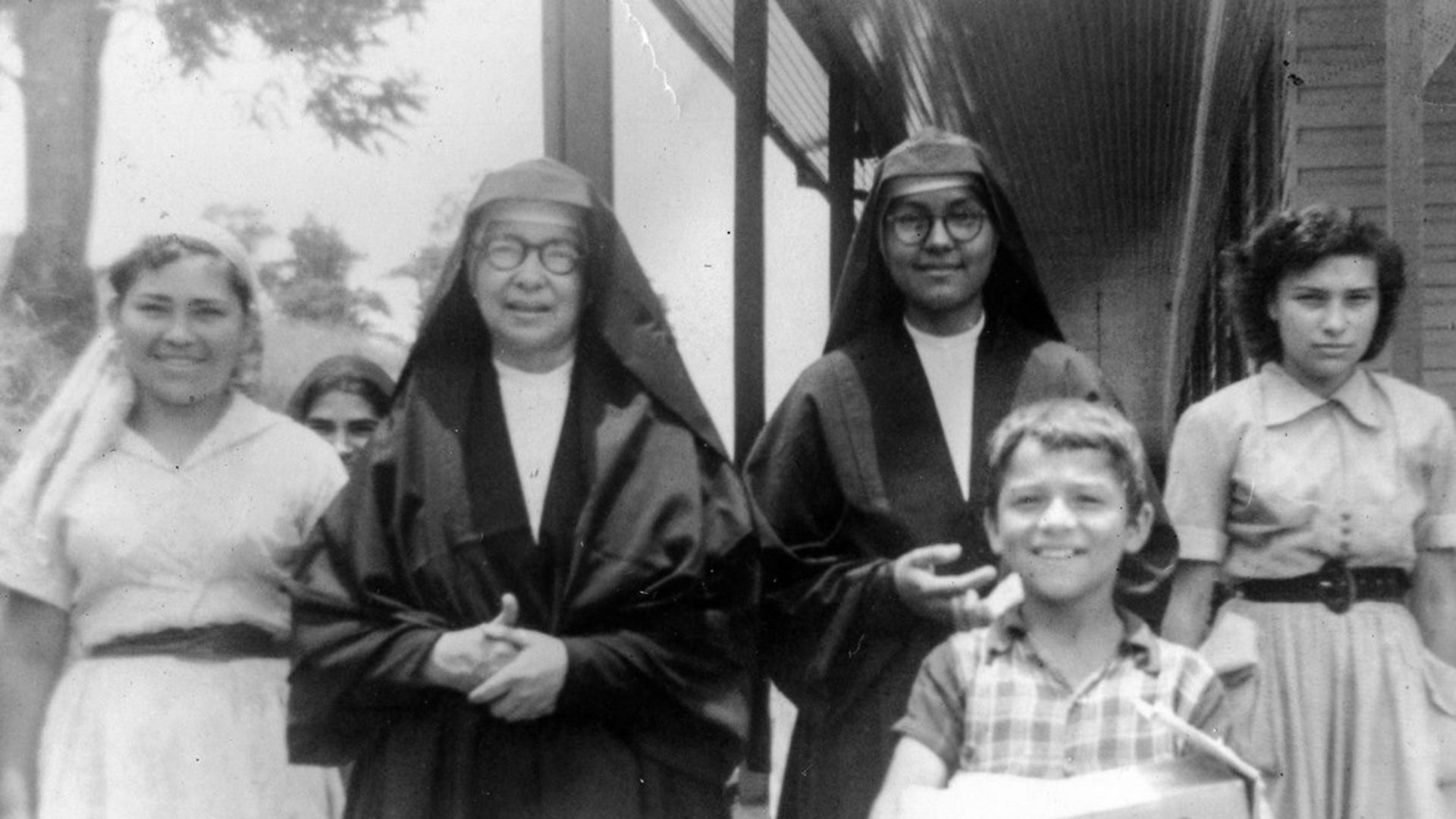
She was born in Granada, Nicaragua, on 13 January 1902. Her father, a minister in the republican government and a very wealthy man, was a model of generosity towards the poor. Maria took very much after her father and was the subject of high expectations. She studied music, piano and violin with great success, but, captivated by the charism of Don Bosco, on 6 January 1923 she became a Daughter of Mary Help of Christians. She wrote: “Holiness consists in a life of intimacy with God, with Jesus permeating our lives… Today, Jesus, teach me to speak, to work and to live solely in your love, of your love and for your love”.
Until 1930 she lived in Granada, Nicaragua, as a teacher of music, painting and typing, without ever neglecting her commitment to catechesis, theatre and the oratory. She was much loved and even then remembered for her cheerfulness, simplicity and ability to inspire a love for God and Mary Help of Christians.
In 1929, she made her perpetual vows. In 1931, she was sent to San José, in Costa Rica, where she lived for a full 46 years. She taught at a school for young girls from wealthy families, but she sought out above all “poor and abandoned children”, just like Don Bosco. She wrote: “I must give myself to the poor. What shall I give? My time, my intelligence, my self-sacrifice, and that all who thirst may come and drink; to give my energies by lavishing myself generously for the good of others; to give my health by suffering for them the cold, hunger, and lack of everything.”
This resolve gradually turned into creative activity. In 1934, she asked the Provincial to allow her to form, from among the Oratorian girls and the older pupils, a group of catechists and then send them out in pairs to evangelise the poor in the most run-down areas of San José. The Provincial was sceptical, but granted her permission. She added: “I ask nothing more of you. Our Lady will help me.”
In October 1939, some young girls from the choir told her of the miserable life in the shanty towns on the outskirts and the proselytising carried out in those areas by communist-Marxist propaganda.
Sister Romero Meneses then exclaimed: “ We too must go into the homes of the poor, not to speak of hatred and vengeance, but of Christian charity, of kindness towards all, of faith and trust in Divine Providence. With God’s help and devotion to the Blessed Virgin, we shall succeed (…). We shall go on mission and you shall be the little missionaries of Christ. You shall go two by two, like the disciples of Jesus. You will bring food and clothing to the needy, but above all you will speak of the Kingdom of God, and everything must be for Christ and for souls.”
Thus was born the “Work of the Oratories” project, thanks to those young women she called las misioneritas. It was decided to begin at Christmas. Over the following two months, preparations were hurriedly made: collecting basic necessities, prayer, and catechetical formation.
Sister Romero Meneses explains: “Before entering a house, invoke Our Lady with the prayer: ‘Lay your hand upon it, my Mother, lay it before mine’. Knock, enter, greet the children affectionately and begin the catechesis with the adults. Whilst one of you speaks, the other prays silently in her heart that God may make her companion’s words fruitful.”
Sister Romero Meneses always treated las misioneritas with respect and great affection; they felt loved and supported by her. Together with her, they prepared the materials needed for catechesis, missions and oratories, and they collected money. She also involved the students’ families: she distributed fabric to many mothers so they could make clothes to offer as prizes at the oratories.
She asked in prayer: “Who will help me?” and Jesus replied: “I will, provided you believe and entrust yourself to me. Have I not told you that if you believe, you will see the glory of God?” And Sister Maria said: “So, will you perform miracles?” “Yes, provided you believe and entrust yourself to me as I have told you. Believe and you will see.”
She began to establish holiday oratories and set up 36 of them in various outlying areas of the city. They were characterised by a lively Salesian atmosphere: children learned, played and had fun in a wholesome way.
There was no shortage of difficulties: securing financial aid; enduring humiliation and violence at the hands of the poor themselves; the danger posed by certain areas… Moreover, she suffered from misunderstandings, intolerance, and grumbling… but at the request of the Superiors in Rome, she wrote a book to recount the history of the social works, the labour, the sacrifices, the anecdotes and the adventures of her beloved misioneritas, and gradually the misunderstandings too began to fade.
Charitable activities multiplied, such as ‘Sister Maria’s tea parties’, initially organised in private homes and later at the FMA house, to support the social works. Lotteries and voluntary contributions were organised to provide food and other essentials for female heads of households and destitute elderly people. Clothes, shoes and second-hand items were collected and sold at a “bazaar” to the poorest at a nominal price.
In mid-1955, she asked the Virgin Mary to be able to offer a sign to the poor who could not travel to Lourdes. And this was the origin of the “Water of Our Lady”: simple tap water, yet capable of opening the way to grace for those who use it with faith.
To spread devotion to Mary Help of Christians, between 1958 and 1964, she had a church built in the centre of San José on a cafetal (coffee plantation), around which numerous social projects sprang up, involving wealthy people who had been won over to the cause after experiencing the effects of Marian devotion. The work continues to this day and is known as “Casa de la Virgen” or “Casa de María Auxiliadora – Obras Sociales”.
In 1967, literacy courses for adult and elderly women began, followed in 1968 by the School of Social Orientation. With the help of specialist volunteer doctors, she established a polyclinic to provide medical and pharmaceutical care for the poor. For homeless families, she had “real” little houses built, the “Ciudadelas de María Auxiliadora”, a project that continues to this day through the lay association “Asayne” (Asociación Ayuda a Necesitados). In 1973, a residential school for at-risk young people was established.
Each of these social works bears the mark of the Salesian spirit, which seeks to see all those who come to the “House of the Virgin” – whether to ask for help or to offer solidarity – “happy in time and in eternity”.
Her industriousness was sustained by her intimacy with Jesus and Mary (“Everything for my King and my Queen”), which made her a true contemplative, a mystic, as her “Spiritual Writings” bear witness.
She died of a heart attack on 7 July 1977 in Las Peñitas, Nicaragua, after returning to her homeland for a period of rest. Her body was returned to San José and rests in the Mausoleum at the great work she founded.
John Paul II beatified her in Rome on 14 April 2002, making her the first woman to be beatified in Central America.