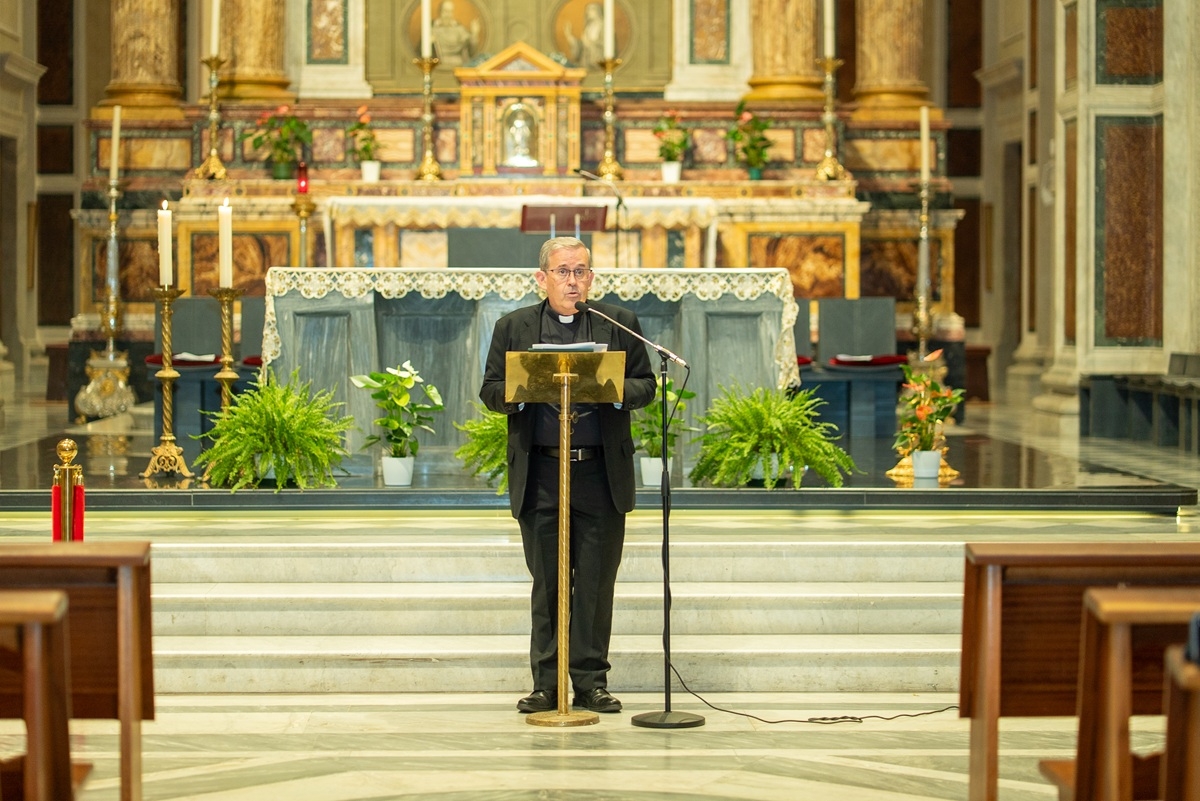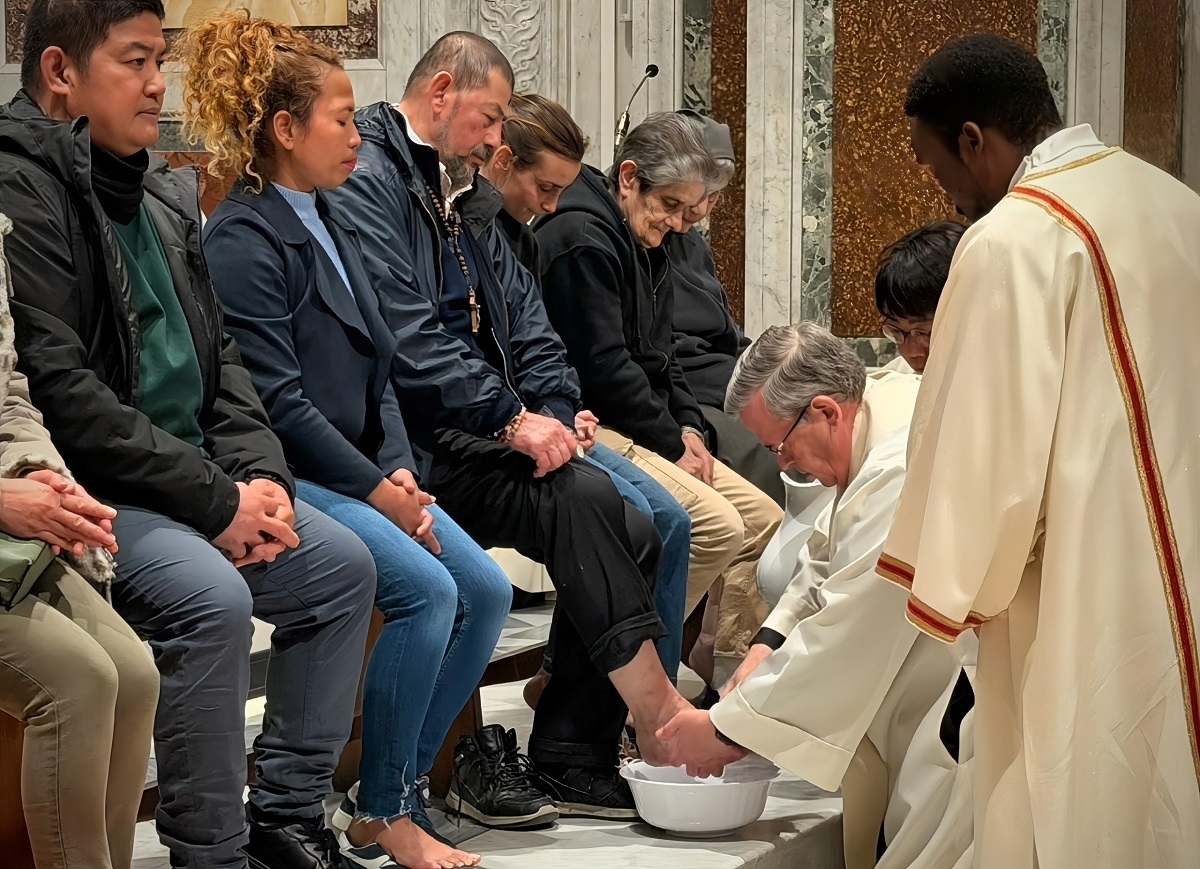
The Washing of the Feet, the institution of the Eucharist and the very fact that all this takes place at the hour of betrayal and human failure were the three core themes explored by Don Bosco’s 11th Successor.
Firstly, he drew the attention of the faithful who packed the Salesian basilica to the act of “absolute humility” of the washing of the feet, a gesture usually reserved for the lowest-ranking slaves. Fr Attard emphasised how Jesus’ gesture − girding himself with a towel and bending before his disciples − reveals the true face of God: a God who humbles himself, who serves, and who embraces wounded humanity.
Peter’s natural resistance, on closer inspection, therefore represents the natural human reluctance to accept that one’s own frailties might be healed. “We prefer to present ourselves to God with clean feet, clean hands, and an orderly life. But Jesus does not wait for us to clean ourselves: he comes to wash us where we are dirty,” commented Fr Attard.
Following the humbling act of the washing of the feet, which symbolically foreshadows the cross, the second movement is that of the sublime gift of the Eucharist, “the definitive form of God’s love: not a memory, but a presence; not a symbol, but the memorial, the real gift of himself.”
On this occasion, the Rector Major emphasised not only the radical nature of this total self-giving, but also the symbolic reality of the bread and wine, fragile elements in which God chooses to dwell so as to be carried “to the darkest places in the world”, in a dynamic of perpetual self-giving.
Finally, Fr Attard highlighted an aspect of the scene of the Last Supper that is all too often overlooked, namely the paradox that it takes place in a context that, humanly speaking, represents a total failure: Judas has already decided to betray him, Peter, despite his good intentions, will deny him, and the other disciples, with the exception of John, would abandon him en masse.
But Jesus “does not wait for better disciples or a more worthy humanity. He does not postpone it until conditions are favourable… Because the Eucharist is not the reward of the righteous: it is the medicine for the wounded”. And it is precisely this circumstance that reveals the true value of the Eucharist, which transforms failure into grace “not because it ignores evil, but because it transfigures it”.
That is why, concluded Fr Attard, the Lord’s love “to the very end” is the beginning of new, infinite paths open to all humanity.
The celebration then continued with the rite of the Washing of the Feet, during which Fr Attard washed the feet of 12 parishioners, representing different groups of people: two poor people, two young people, two religious, two catechumens, two children from the catechesis groups and a couple.
Finally, with the procession of the Blessed Sacrament to the altar of repose, the long period of adoration and accompaniment of the Lord towards the second stage of the Easter Triduum began: the celebration of his Passion and Death on Good Friday, in anticipation of the fullness of the Resurrection on Easter Sunday.
The text of Fr Attard’s homily is available at the bottom of the page.