The country is facing one of the world’s most serious yet overlooked humanitarian crises. Violence, mass displacement and the collapse of basic services have left millions of people in a situation of extreme hardship, especially children. According to United Nations data, more than 8 million Sudanese have been forced to flee their homes – the world’s largest internal displacement crisis – and around 25 million, more than half the population, are in need of urgent humanitarian aid. Furthermore, tens of thousands of people have lost their lives since the conflict began. As has been highlighted since the start of the war, the country is facing an emergency characterised by hunger, poverty and international neglect.
In this fragile context, education has become one of the main casualties. Thousands of schools have been destroyed or closed, and millions of boys and girls have seen their education interrupted. Without access to a safe environment, many children spend their days on the streets, exposed to risks such as child labour, forced recruitment, violence or exploitation.
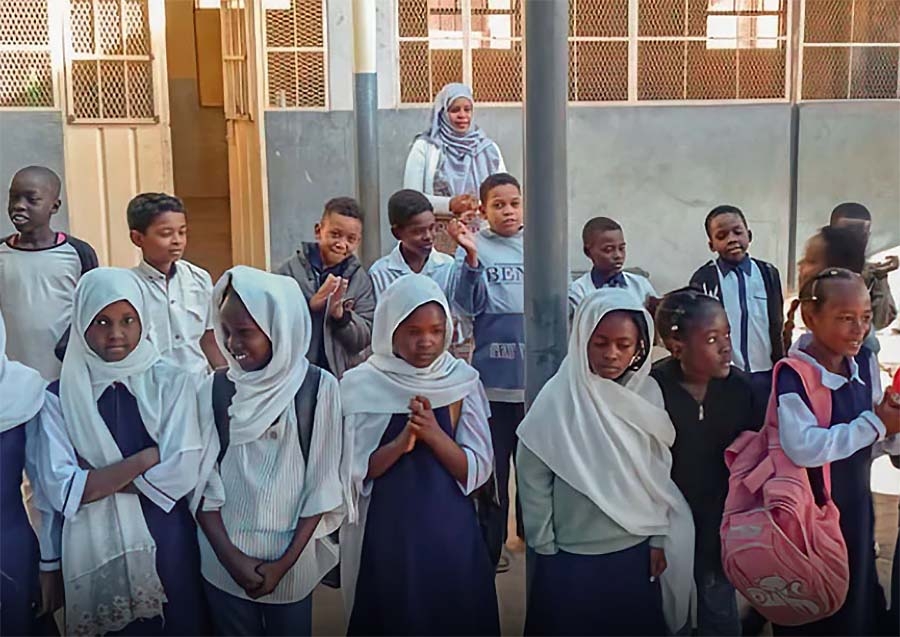
The situation is particularly critical in the capital, Khartoum, where the impact of the conflict continues to be devastating. However, amidst this reality, signs of hope are beginning to emerge. The Salesian missionaries, who have been present in the country since 1982 and who, for security reasons, had been forced to leave at the height of the conflict, have decided to take a step forward and resume their educational work in one of the hardest-hit areas: Kalakala.
Specifically, the project aims to restore and reopen primary schools, providing children with a safe space in which to learn and grow. The initiative involves repairing damaged infrastructure, supplying school materials and launching food programmes to ensure pupils attend school regularly.
In total, the aim is to assist 1,500 boys and girls affected by the war, offering them not only access to education but also an environment protected from the risks arising from the conflict.
The Salesian project responds to an urgent need: the prolonged closure of schools has significantly increased the risk of children being permanently excluded from the education system. Furthermore, the lack of resources among families, exacerbated by inflation and the loss of livelihoods, prevents many children from returning to the classroom under their own steam.
Faced with this situation, Salesian schools fulfil not only an educational role, but also a social and preventative one. Through school feeding programmes, educational activities and support services, efforts are made to improve children’s well-being and foster their holistic development. In other words, the school becomes a vital space for regaining a sense of normality amidst uncertainty.
The Salesian mission also draws on a strong community network. The involvement of educators, volunteers and local groups makes it possible to gradually rebuild the social fabric and strengthen the response to the emergency. This joint effort is essential to ensure the sustainability of the initiatives and their long-term impact.
After years of violence, therefore, Sudan finds itself at a delicate stage, with the beginnings of recovery visible in some areas. However, the country’s future will depend largely on its ability to protect its children and guarantee them access to education.
The reopening of schools in Kalakala is not merely an immediate response to the emergency, but a strategic investment in the future. Because every child who returns to the classroom is another step towards rebuilding a country that needs, more than ever, opportunities, stability and hope.
Source: Misiones Salesianas