The theme of work was particularly dear to Don Bosco, who in his lifetime was a pioneer in devising an educational system that offered not only schooling but also vocational formation and the protection of young people’s rights.
In the 19th century, a period marked by profound economic and social transformations due to the Industrial Revolution, the living and working conditions of young workers were extremely harsh. Don Bosco realised that many young workers were exploited and deprived of their rights.
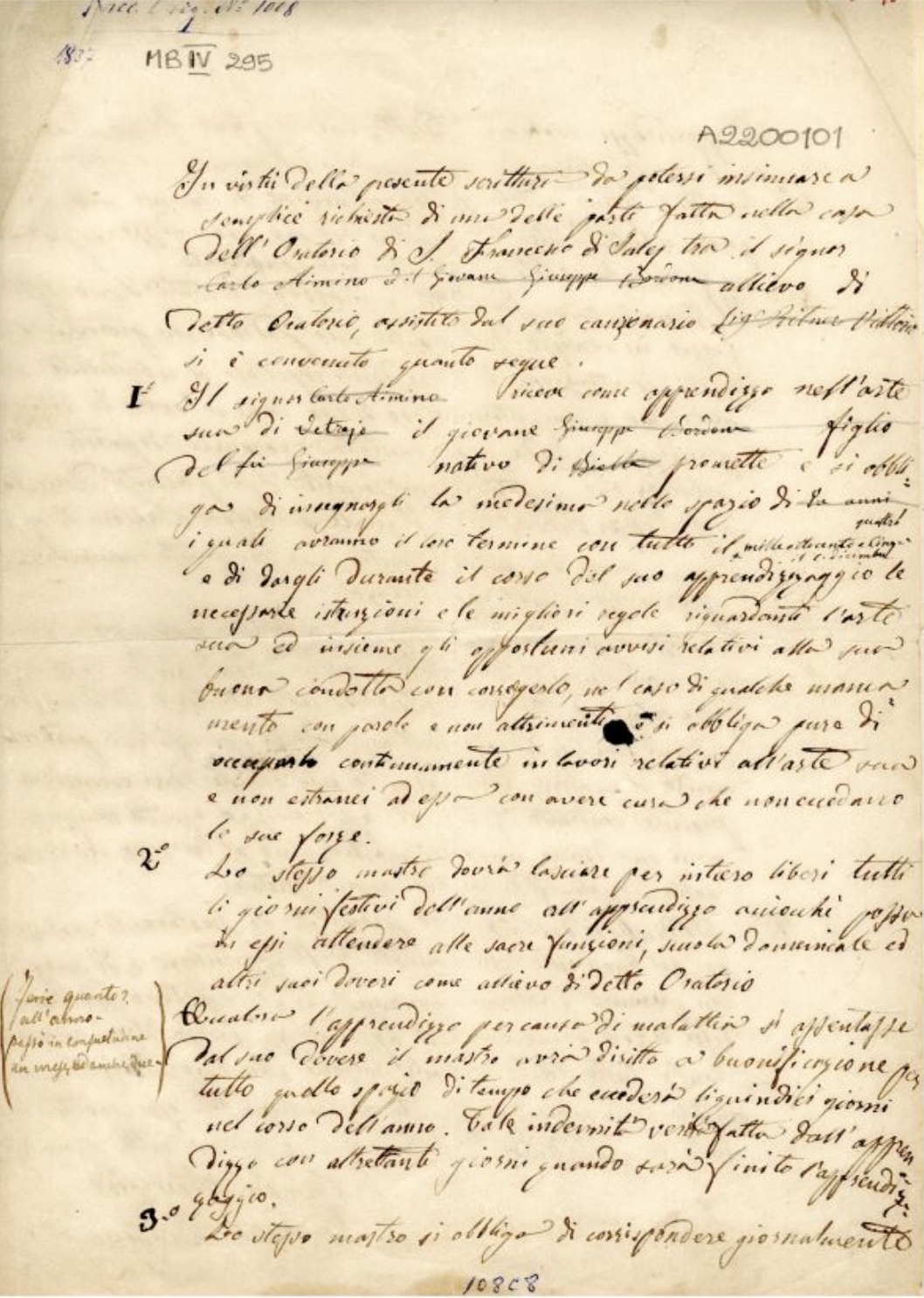
Thus, to offer greater protection, he drew up one of the first apprenticeship contracts in history. The first agreement dates back to November 1851 and was signed by the glassmaker Carlo Aimino and the young Giuseppe Bordone. In this document, the glassmaker undertook to teach the young man his craft for a period of three years, guaranteeing him adequate formation for the work, weekly rest, summer holidays, a progressive wage, and respect for his person.
A few months later, in 1852, Don Bosco drew up another document setting out the rights and duties of both the young apprentice and the employer. This ‘apprenticeship contract’ was similar to the previous one, but was written on four pages of stamped paper. This time it concerned a carpenter’s apprentice, Giuseppe Odasso, hired for two years by Giuseppe Bertolino.
In a constantly changing world, the Salesian model remains, even today, an extraordinary example of how school and work can be tools for human and professional growth.