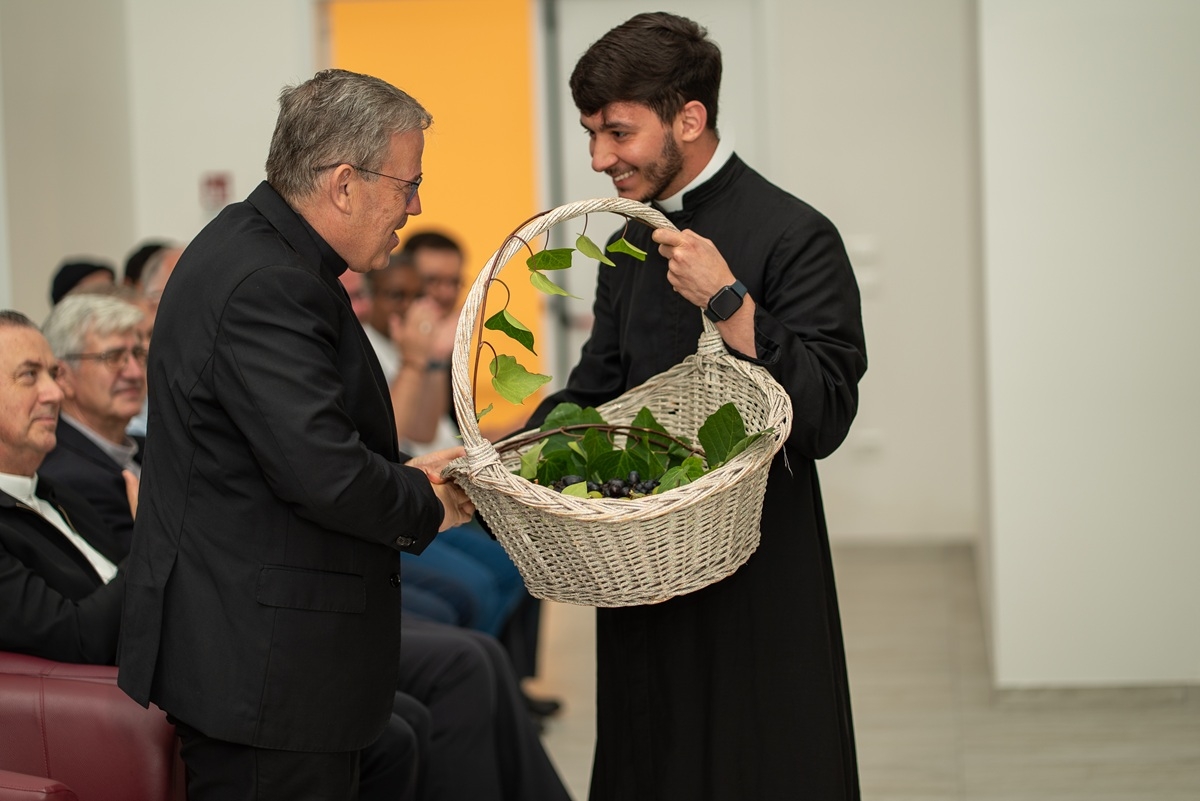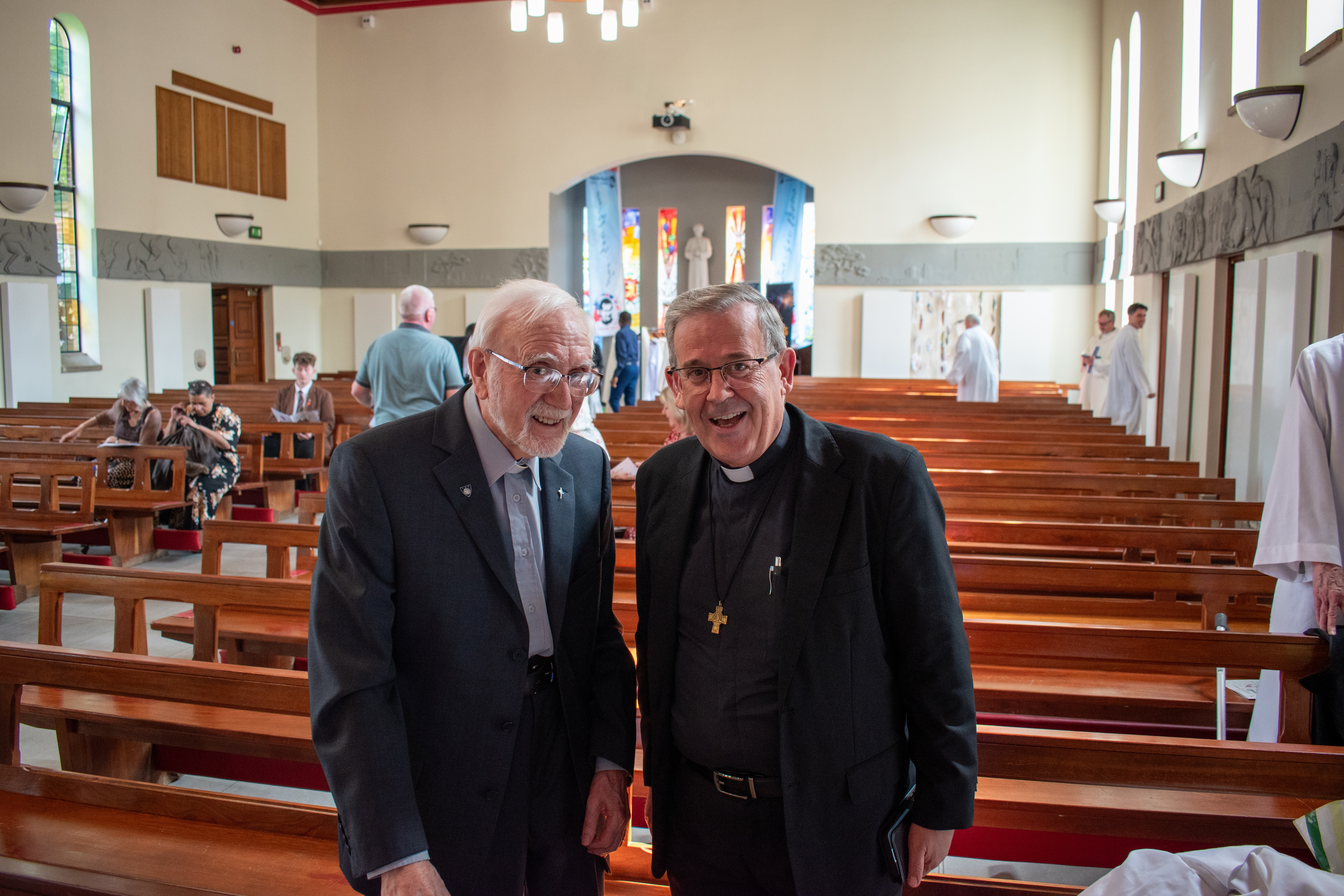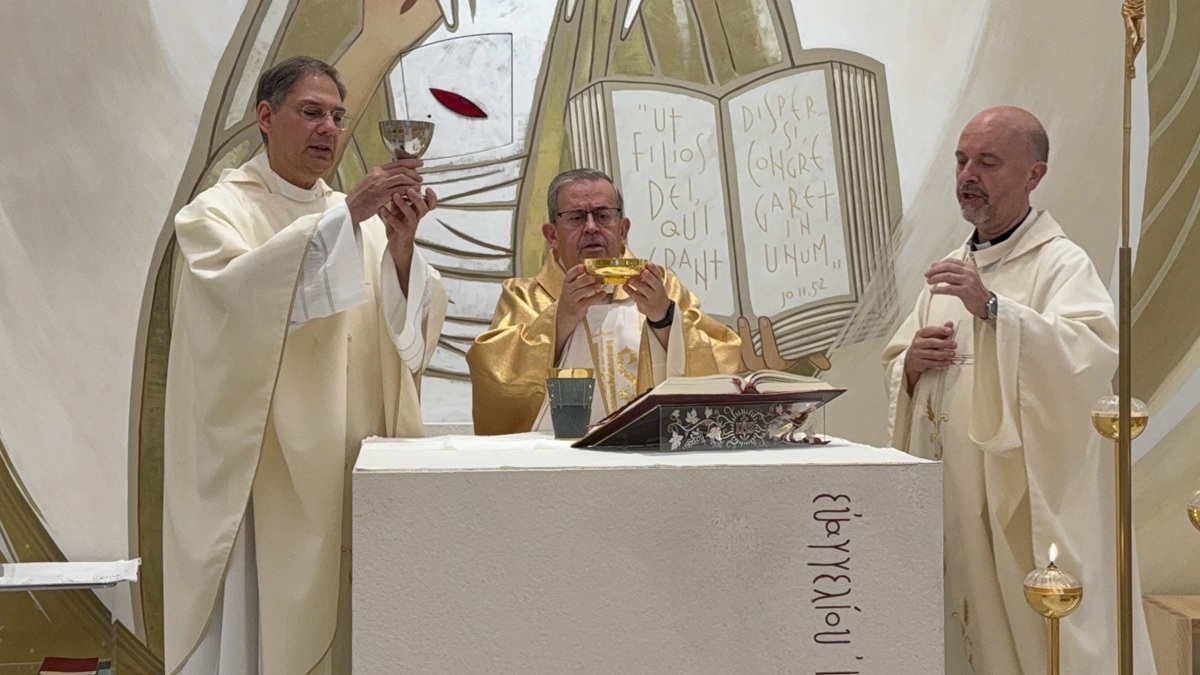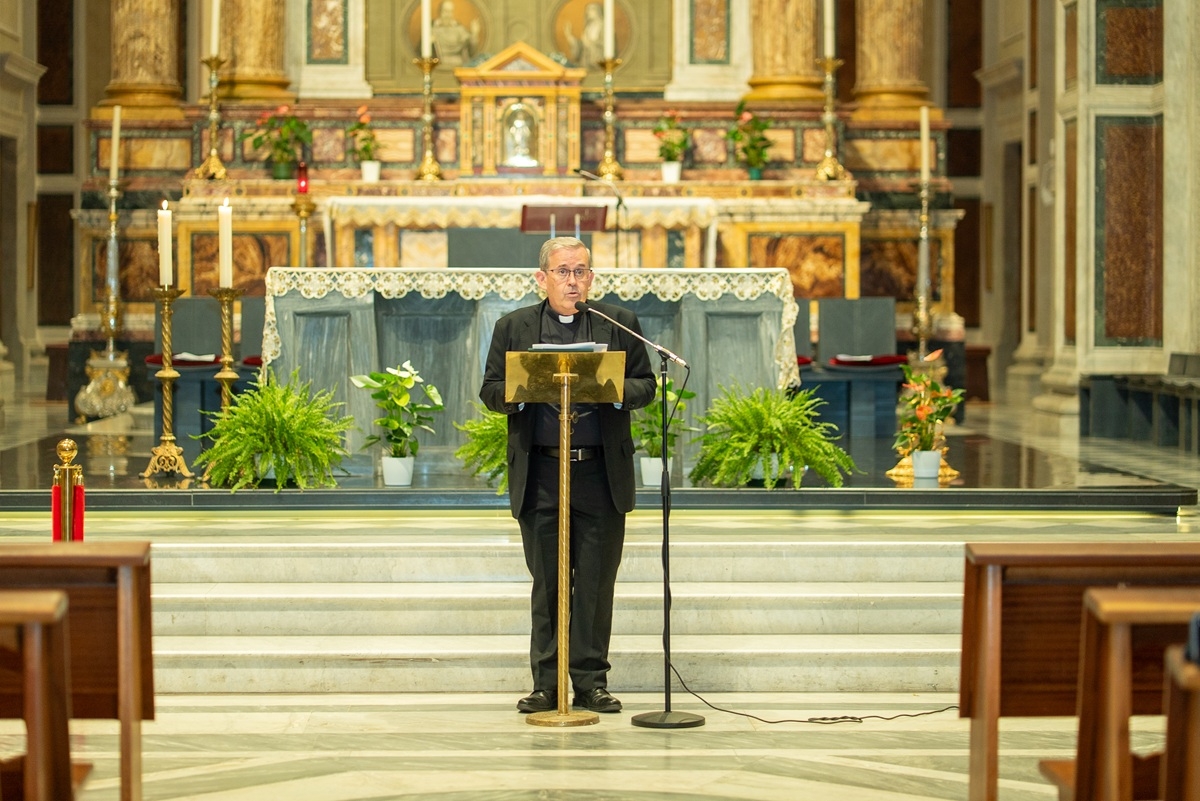
On 24 June, the Solemnity of the Nativity of St John the Baptist and a date so dear to the Valdocco tradition, Don Bosco’s Successor recalled that this is not ‘just any date’, but a day steeped in memory, affection and spiritual significance. Indeed, it was precisely on 24 June that the young people of the Oratory spontaneously expressed their gratitude to Don Bosco in a genuinely family-like atmosphere.
Gratitude: a spiritual category of the Preventive System
The Rector Major emphasised that gratitude is not an incidental or purely emotional element of Salesian spirituality, but belongs to the very heart of the charism. It represents a true spiritual, educational and pastoral category, to the extent that one can affirm that the Preventive System is understood from within precisely through gratitude.
‘To be grateful,’ he explained, ‘means recognising that one’s vocation springs from a history of grace. The charism is not a possession, but a gift received and entrusted to the responsibility of each individual. No one is the master of the Salesian charism: we are all indebted to it.’
Gratitude thus becomes an ‘act of truth’: recognising that one’s life has been accompanied by faces, encounters, interventions and even trials through which the Lord has woven one’s personal and communal journey.
Don Bosco: a son before being a father
Referring to the figure of Don Bosco, Fr Attard highlighted an often-overlooked aspect: the Saint of Youth knew how to allow himself to be educated. From Mamma Margaret, Fr Calosso and Fr Cafasso, he learnt a style of humble docility to God’s action.
‘There is no charismatic fruitfulness without filial humility,’ he affirmed, ‘nor true spiritual fatherhood without having accepted that we are children. Grateful remembrance of those who have brought us into being in the faith and in our vocation safeguards the truth of the mission.’
In the same way, Don Bosco knew how to respond with faith to Providence’s initiative: he did not found a work based solely on human strategies, but by interpreting reality through spiritual eyes, seeing in young people not a problem, but a calling.
Gratitude that generates commitment
Gratitude, however, is neither nostalgia nor sentimentality. It is generative. If it is authentic, it translates into commitment.
Don Bosco did not merely teach young people to say ‘thank you’, but created an environment in which gratitude became a way of relating and an educational principle. The young person who was loved learnt to trust; the young person who was respected learnt to respect. Ingratitude, on the other hand, closes the heart in self-centredness and extinguishes wonder.
Maturity – as the Rector Major emphasised – does not consist in being independent of everything and everyone, but in freely recognising the good received and transforming it into shared good.
Gratitude as a style of leadership
A significant part of the reflection was devoted to the theme of authority. Gratitude – he stated – must become the hallmark of the Rector Major and of all those called to leadership.
Without gratitude, authority risks losing its Gospel-inspired character. It reminds those in charge that they are servants of a good received, not owners of a good they have produced themselves. Authentic authority arises from entrustment, not from appropriation.
Gratitude translates in practice into a style characterised by listening, respect, discretion, the ability to correct without humiliating, and firmness without rigidity. It is a style that makes authority humanly beautiful and evangelically credible, modelled on Don Bosco’s fatherly leadership.
A culture of gratitude and evangelical simplicity
The Rector Major also emphasised the importance of gratitude towards benefactors, who share in the Salesian mission. Gratitude towards them is not diplomacy, but spiritual justice.
At the same time, it fosters a spirit of sobriety and the transparent and responsible use of the goods entrusted to us: those who recognise a gift do not waste it, but safeguard it in the service of young people and the poor.
“Here we all belong to Don Bosco”
In conclusion, Fr Attard echoed Carlo Gastini’s famous motto: “Here we all belong to Don Bosco”. This expression denotes not only an emotional sense of belonging, but also a spiritual awareness: Salesianity is the fruit of a gift, of a living tradition, of a grace that spans the generations.
24 June, therefore, is not merely a name day, but a celebration of a relationship that has spread from Valdocco throughout the whole world. In an age marked by individualism and mistrust, gratitude can become a true educational and spiritual path, capable of fostering – he concluded – a healthier, freer and happier humanity.
With his Goodnight, the Rector Major thus offered the Salesian Family not only a reflection for the feast day, but also guidance for the journey ahead: to live out the mission as a grateful response to a grace received.
The full text of the Rector Major’s Goodnight is available in five languages at the bottom of the page.
{gallery}RMG – BN Don Fabio Festa Grazie 2026{/gallery}