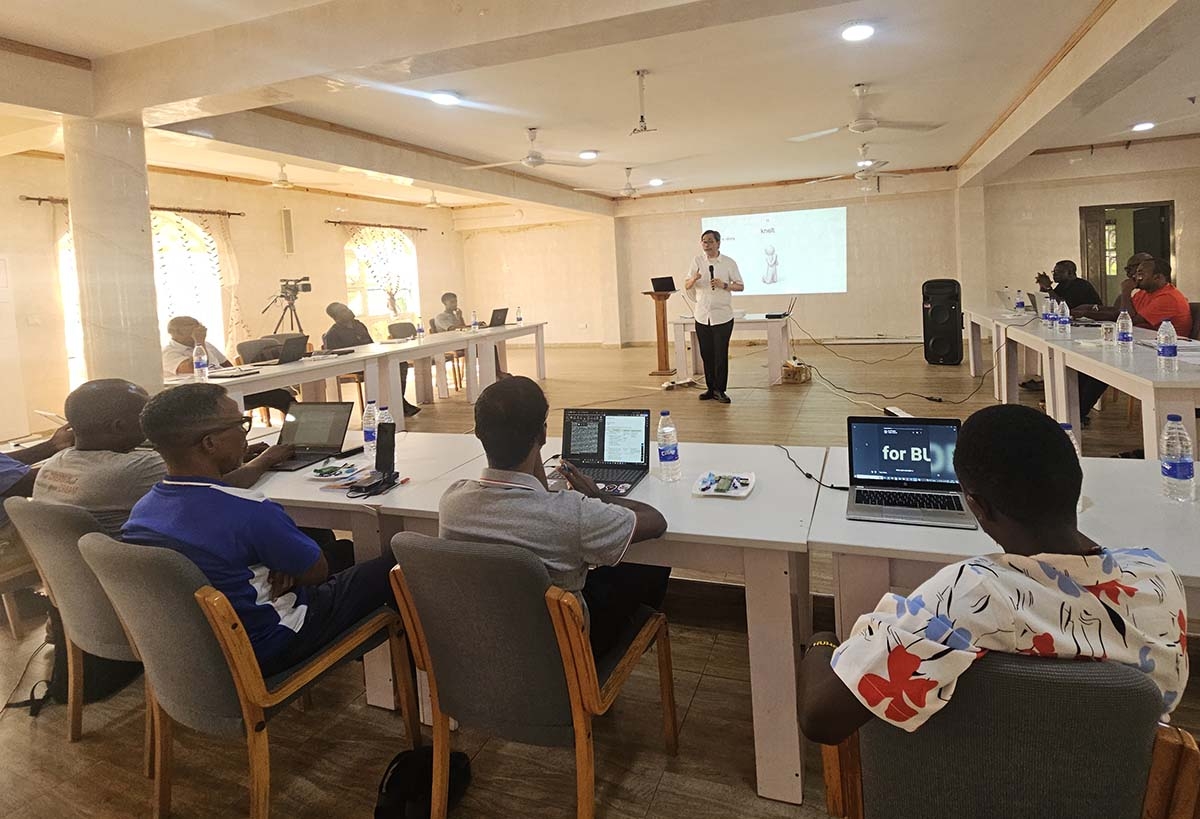
The workshop aimed to enable Salesian leaders to govern persons, communities, and institutions competently and evangelically, integrating Salesian leadership, managerial clarity, planning discipline, and intentional communication, in fidelity to Don Bosco’s mission today.
Fr Fidel arrived in Lagos on 2 February, where he met with Salesians and staff at the Provincial House before travelling to the Post Novitiate in Ibadan. There, he shared a fraternal evening with the post novices and delivered a reflective Good Night talk. On 3 February, after presiding at the Eucharist, he returned to Lagos for the formal opening of the workshop.Leadership and Governance as Part of the Salesian Vocation
In the opening sessions, Fr Fidel addressed a central challenge in Salesian formation: while spirituality and pastoral zeal are well emphasized, leadership and governance are often insufficiently formed. He invited participants to rediscover leadership and management not as administrative burdens, but as intrinsic dimensions of the Salesian vocation and expressions of pastoral charity.
“Governance is not opposed to our vocation; it flows from it,” Fr Fidel noted. “To love the young today also means to lead, decide, plan, and communicate responsibly for the good of the mission.”
Drawing from the Salesian Rector’s Manual, the workshop clarified the necessary integration of:
Leadership, which provides vision and direction; Management, which organizes people, processes, and resources; Authority, which ensures responsibility and credible decision‑making.
Participants were encouraged to avoid the extremes of authoritarian control and fearful indecision, learning instead to exercise authority with competence, transparency, and evangelical motivation.
The Educative and Pastoral Community at the Heart of the Mission
A significant focus of the workshop was the Educative and Pastoral Community (EPC), described as the “ordinary and concrete subject of the Salesian mission.” Through guided reflection and role‑mapping exercises, participants examined how leadership and responsibility are shared among Salesians, lay collaborators, and members of the Salesian Family.
Fr Fidel emphasized that the Salesian is not the sole decision‑maker, but the animator and guardian of the charism, called to foster communion, shared discernment, and co‑responsibility. Well‑functioning EPCs, he noted, prevent leadership isolation and strengthen both mission effectiveness and community life.
Planning, Communication, and Shared Responsibility
The workshop also highlighted the vital role of planning and organizational communication in sustaining the mission. Weak planning and unclear communication, participants reflected, often lead to wasted energy, confusion, and parallel decisions. In contrast, intentional communication—inspired by Don Bosco’s Preventive System—builds trust, participation, and shared ownership.
Salesian communication, Fr Fidel stressed, must be relational, educative, preventive, and pastoral, not merely technical or bureaucratic. “Authority in Salesian life is exercised primarily through communication—through presence, dialogue, listening, and explanation,” he reminded participants.
Toward Competent and Participatory Leadership
Throughout the three days, participants will engage in practical exercises on delegation, competence development, shared governance, conflict management, and crisis communication. The formation underscored the need to move beyond reliance on goodwill alone, investing instead in formation, skills, and collaborative leadership, especially with lay mission partners.
As the workshop unfolded, participants were encouraged to understand governance not as an extra responsibility, but as a way of living their vocation in service of people, communities, and especially the young, safeguarding the faithfulness, credibility, and vitality of the Salesian mission in a changing world.