During the three days of the event, the Salesian Network will present experiences that combine cutting-edge technology and pedagogical tradition, illustrating how they can enrich each other. The ‘GO Beyond’ project will demonstrate how Artificial Intelligence can be integrated without compromising the Salesian educational identity, based on the centrality of the person, authentic relationships and essential activities outside the classroom, such as the playground and the oratory.
‘Participation in Didacta is an opportunity to share an educational model that is rooted in the Salesian tradition and aims at innovation, while keeping the values of the person at the centre,’ explained Fr Elio Cesari, director of the National Centre for Salesian Works. This approach is well summarised in the words of Fr Fabio Attard, Rector Major: ‘AI is not just a tool: it is part of our mission as Salesians living in the digital age.’
The main events: ‘Go Beyond’ and ‘Innovation that includes’
The 2026 calendar of events offers high-profile opportunities to discuss how innovation is changing education.
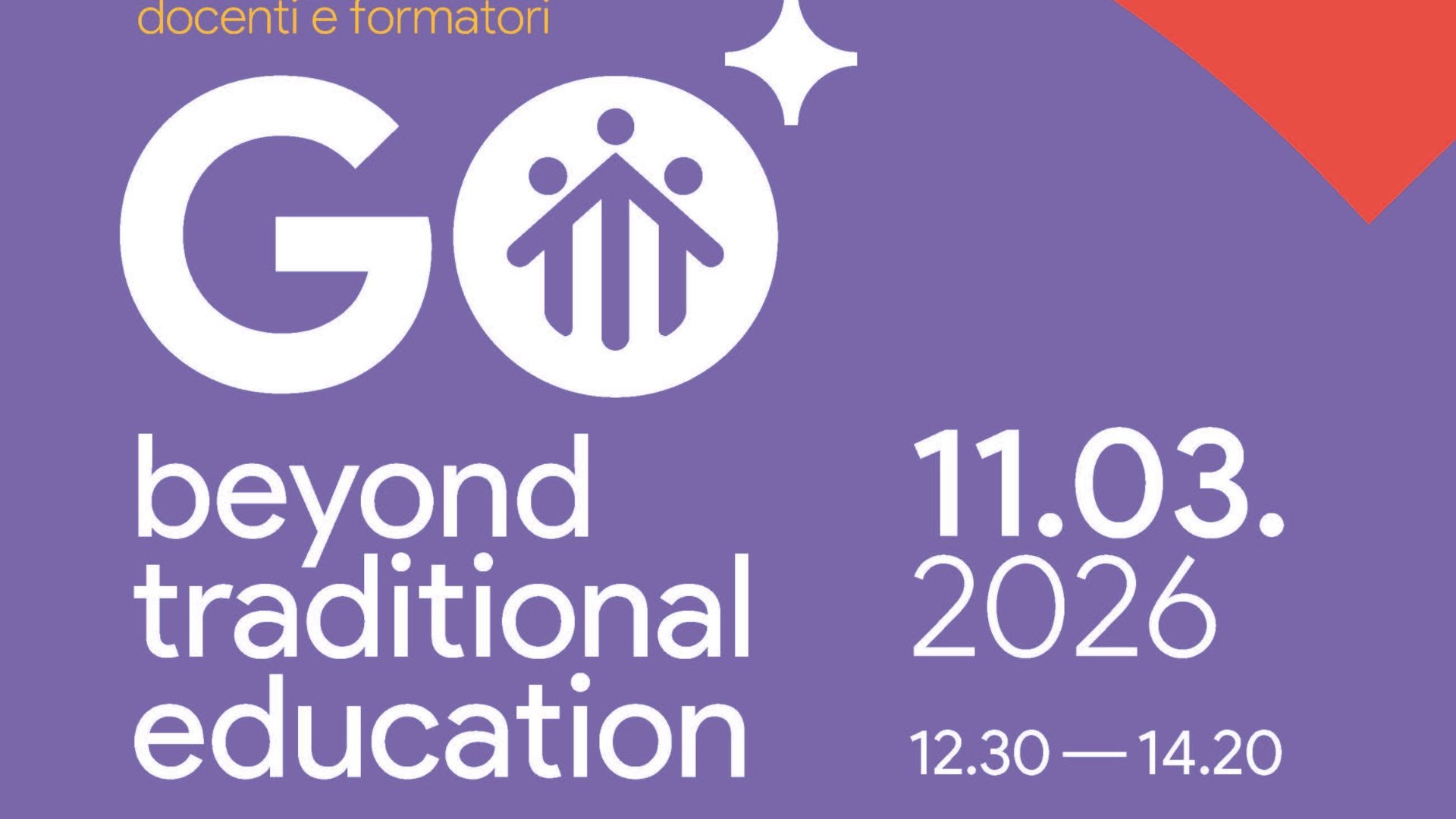
On 11 March (12:30-14:30, Polveriera E14 room), the central event ‘Go beyond traditional education’ will be held, recounting the concrete experience of 80 Salesian schools and vocational training centres that are integrating artificial intelligence into daily teaching and laboratories.
The meeting will be attended by Google Italia and MR*Digital, the project’s technology partners; the Pontifical Salesian University (UPS), which is responsible for research and academic support for the project; and Damiano Previtali, President of the Higher Council of Education, who will conclude the conference.
On 13 March (11:30-13:20, Stand J16, Aula Magna MR*Digital), it will be the turn of “Innovation that includes”, an event organised in collaboration with Schneider Electric and Google. The meeting will focus on the integration of energy transition, industrial automation 4.0 and social inclusion, with particular attention to young people who need a second chance. There will also be a practical demonstration of itinerant teaching with students, and there will be discussion of the application of AI in the workplace.
In addition, a rich programme of workshops will be held at stand W67 in the Spadolini pavilion, on the top floor, where students and pupils from the Salesian educational network will present projects on active teaching, inclusion and the development of strategic skills, tested and implemented in classrooms and laboratories.
The numbers of the Salesian network for vocational formation and schools
Currently, the Salesian network in Italy has 152 schools in 15 regions, educating approximately 23,900 students every day, thanks to the commitment of 2,815 teachers.
In addition to these educational centres, there are 64 Vocational Training Centres (CFP) in 17 regions, with a total of 27,829 students, accompanied by approximately 1,650 educators.