Data confirming the educational value of innovation
The results show how the informed use of Artificial Intelligence tools can significantly improve various aspects of the teaching experience.
According to the evaluations collected, AI-supported lessons show a perceived increase in the clarity of learning objectives, in the management of activities, in student engagement, in the creativity of content and in the development of critical awareness.
The increases in student engagement and creativity are particularly significant, whilst 86% of the teachers involved state that they wish to continue using generative AI tools on a regular basis to support the design and delivery of teaching activities. Furthermore, almost seven out of ten teachers recognise an improvement in the quality of educational design.
However, the research highlights a crucial point: the most significant benefits emerge when Artificial Intelligence does not replace the teacher, but is integrated into innovative and personalised teaching methodologies, amplifying the effectiveness of the educational process.
The Salesian model: technology at the service of the person
Whilst the quantitative results are of great interest, what makes the Salesian experience particularly unique is the pedagogical framework underpinning it.
The reflection developed by the Pontifical Salesian University (UPS) and the schools involved has in fact led to the formulation of a principle that we might define as “technology in its time”: Artificial Intelligence can be used to facilitate learning, instructional design and the personalisation of educational pathways, but it cannot replace the educational relationship.
When the time comes for personal interaction, guidance, recreation, dialogue and relationship-building, technology gives way to the educational presence.
This is a choice that is fully in keeping with the Salesian pedagogical tradition and reaffirms the primacy of the human person over technological tools. From this perspective, AI is regarded neither as a threat to be feared nor as a solution to be adopted uncritically, but as a resource to be managed according to clear and shared educational criteria.
International recognition
The interest generated by the Italian initiative has caught the attention of the very top echelons of Google for Education.
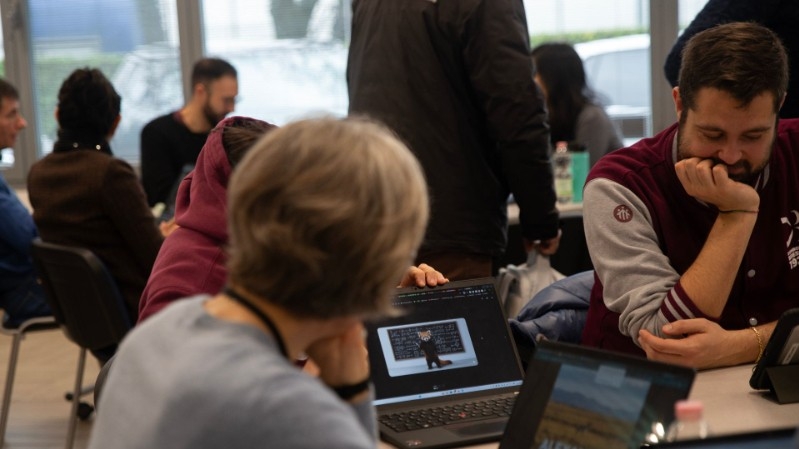
In February 2026, a delegation of fifteen international researchers and engineers from Google for Education travelled to Venice Mestre to meet teachers from Salesian schools and understand how Artificial Intelligence tools were being used in practice in day-to-day teaching activities. It was not a meeting to present the technology, but to listen to those who were already experimenting with it in the field.
The initiative continued on 28 May at the Istituto Salesiano San Zeno in Verona with the “GO beyond traditional education” event, attended by international representatives from Google for Education and various institutional leaders from the education sector. The event provided an opportunity to share the results achieved and reflect on the future prospects of educational innovation.
Research that looks to the future
For the Pontifical Salesian University, this experience represents a concrete example of how academic research, technological innovation and educational mission can engage in fruitful dialogue.
The aim is not to chase technological changes, but to understand them critically and direct them towards the good of the individual and educational communities. The research coordinated by UPS shows that Artificial Intelligence can help improve the quality of teaching and learning, provided it remains embedded within a clear anthropological vision, capable of safeguarding the irreplaceable value of the educational relationship.
At a time when technology tends to permeate every aspect of daily life, the Salesian model offers an innovative yet profoundly human perspective: utilising the most advanced tools without sacrificing the centrality of encounter, dialogue and educational accompaniment.
For true innovation, even before it is technological, remains profoundly human.
Source: Pontifical Salesian University