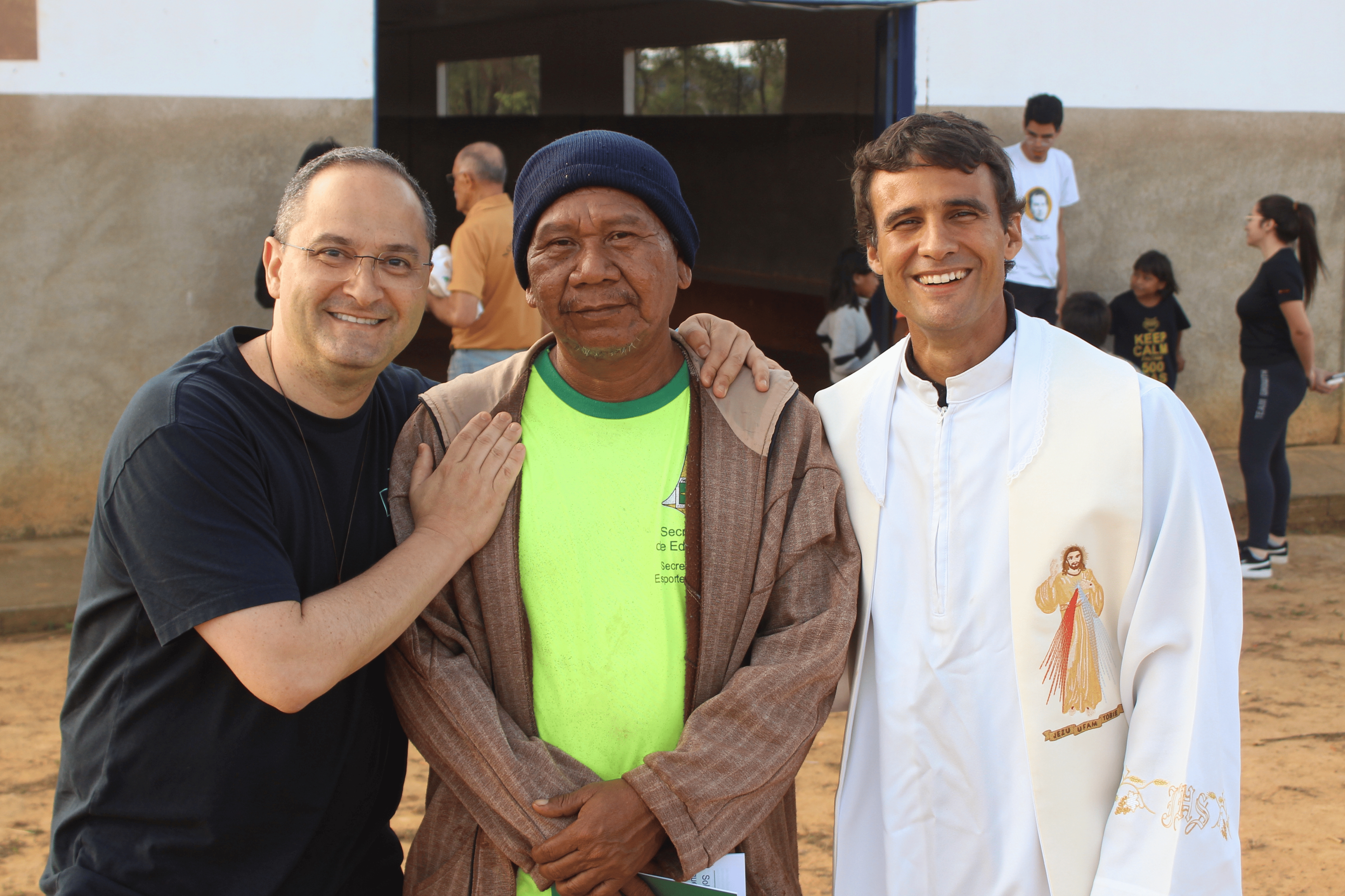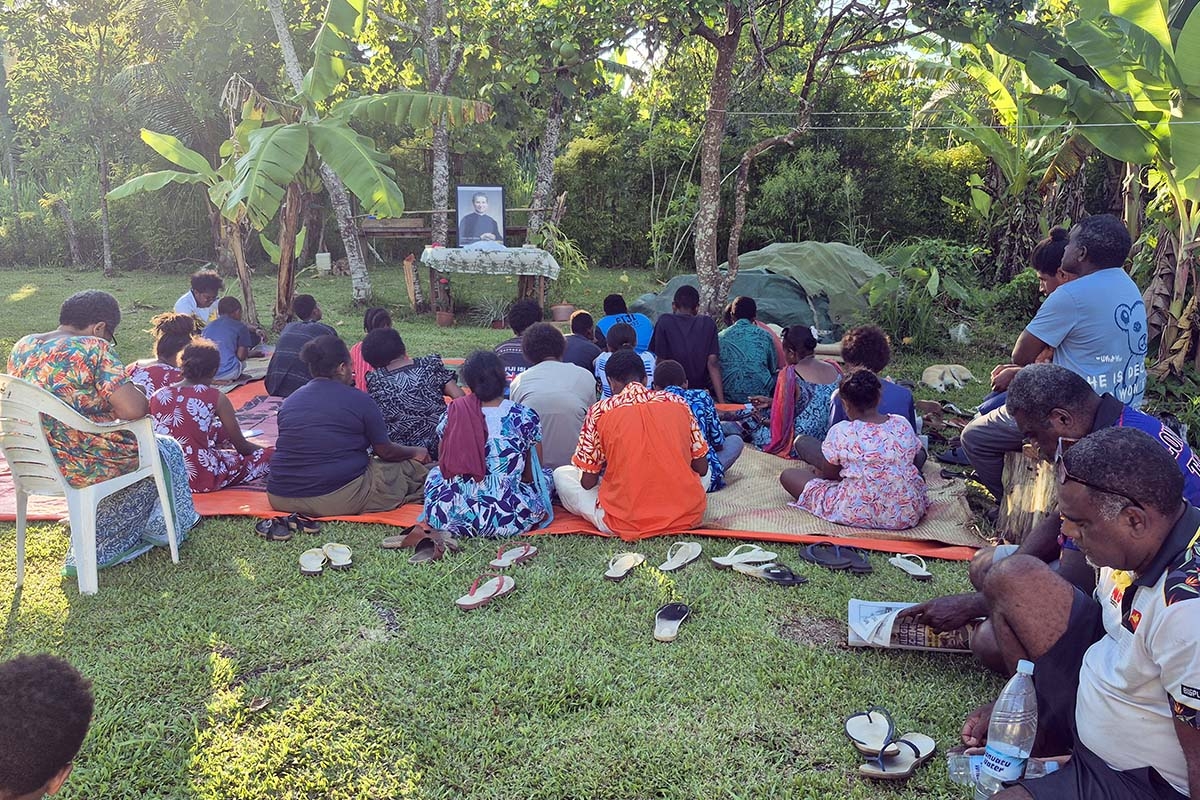
Being new, the Salesian pioneers had planned to celebrate the feast of Don Bosco in a simple way, just together with the clergy and religious. Unexpectedly, however, it was the parishioners themselves who approached the Salesians, asking to learn more about Don Bosco. Accepting the invitation of the parishioners, the Novena Mass was celebrated in the main church and, in the afternoon, the Salesians, together with the parish leaders, visited the nine communities, bringing with them a picture and a relic of Don Bosco.
The visit included a brief presentation of Don Bosco’s life, an explanation of the meaning of the relic, the Rosary with the possibility of confessions, and finally a moment of pastoral exchange during which the local communities expressed their spiritual needs and desires, while the Salesians explained how they could walk together.
Unexpectedly, during the Novena, it was Don Bosco himself who performed miracles. ‘The way people venerate the relic with great devotion and prayer was something that moved us all. Local communities flocked in large numbers to welcome ‘Don Bosco’s visit’, and many approached us for Confession after five or even ten years!’ testified one of the missionary pioneers.
During the same Novena, a teacher from the Catholic school approached the Salesian Brother, Paulus Bataona, telling him that he wanted to become a Salesian. ‘I explained to him that, being married, he could become a Salesian Cooperator,’ says Br Bataona, ‘and he replied: “Yes, I want to become one! In recent days, I have already searched for information on the internet and I understand quite well who a Salesian Cooperator is!”’
’It was a pleasant surprise,‘ continued the Salesian, ’because none of us had talked about the Cooperators; in fact, we thought it was still too early to talk about the Cooperators, even though we had already begun to spread devotion to Mary Help of Christians and were also open to the possibility of the Association of Mary Help of Christians (ADMA). But Don Bosco has gone ahead of us,‘ Br Bataona explains.
When the teacher then approached Fr Alfred Maravilla, the rector of the mission, expressing the same desire, he told him that a formation programme could begin once the minimum number of four candidates had been reached. ’In that case, Father, we can start right away, because I already have four adults who, like me, want to become Cooperators too!’
‘We are deeply touched to see how Don Bosco is truly helping us to realise his dream in Oceania,’ exclaimed Fr Maravilla.
During the feast of Don Bosco, the small village church was packed with faithful for Mass presided over by the Chancellor of the Diocese of Port Vila, as the bishop was out of the country.
‘We were really touched by how the people prepared practically everything: the celebration, the lunch according to Vanuatu tradition, the programme and the logistics,’ observed Fr Moïse Paluku, the third and last member of this first Salesian community in the Melanesian archipelago. We really have no words to express our joy at seeing how the first feast of Don Bosco resonated in the hearts of the people. They themselves said it publicly: ‘from now on, this is our “Don Bosco Day!”’