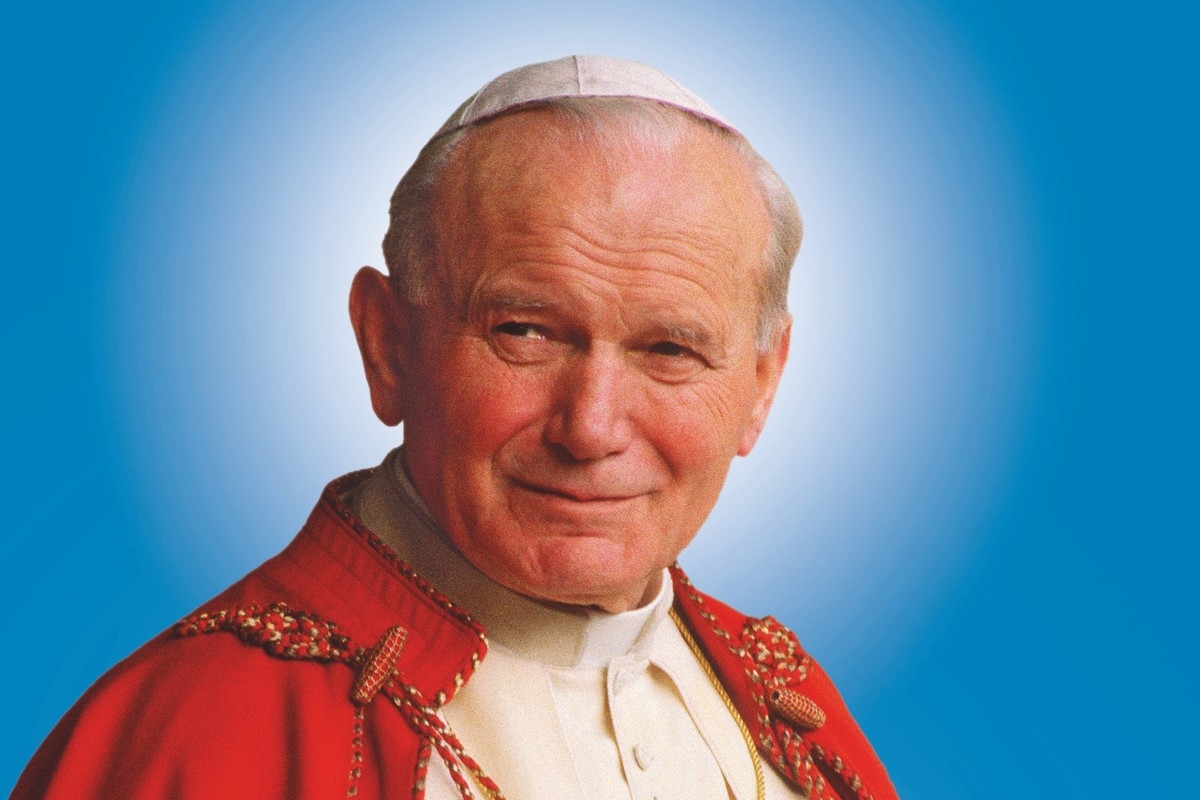
In the book Gift and Mystery, John Paul II wrote: “I cannot, in fact, fail to mention an environment and, within it, a figure from whom I received so much during that period. The environment was my parish, dedicated to St Stanislaus Kostka, in Dębniki, Kraków. The parish was run by the Salesians who were one day deported by the Nazis to a concentration camp. Only an elderly parish priest and the provincial superior remained; all the others were interned.”
On the occasion of the 50th anniversary of the Salesian parish, too, as Pope he sent a very personal letter, in which he wrote, “It is the second parish, after Wadowice, in which I discovered and deepened my understanding of the mystery of the Church, that special community of the People of God which has its origin in the love of the Father… There too, within the community of the Parish of Dębniki, my priestly vocation matured fully and came to fruition”.
We have also received two further testimonies that highlight the importance and significance of this place: “It is well known that I spent the decisive years of my life in a certain Salesian parish, the parish of St Stanislaus Kostka in Krakow… I also saw with my own eyes eight or ten Salesians being taken to the camp. Most of them met their deaths (…) in the camp, during the war. So all this is connected in some way, and by coming here, to the places where the Salesian movement was born, I relive the experience I had during my encounter with the Salesians, with Don Bosco, through those priests who all went to the concentration camp. They wanted one of them to throw the rosary on the ground and trample it; he did not obey, and so he was tortured to death.
So, no matter who a person is—even if it is the Pope—they cannot free themselves from personal relationships, from what they have experienced first-hand. I must say that a significant part, indeed the decisive part, of my life was spent alongside the Salesians in the parish they ran. And there I also found the environment and the people who helped me to be converted – not in the sense of a return to the faith, but of rediscovering my vocation” (John Paul II, Private remarks addressed to the cardinals, the bishops of Piedmont and the Salesians, during his visit to Turin-Valdocco, 3 September 1988).
The second testimony is the homily delivered in the Salesian church of Dębniki: “I shall never forget that day when you parishioners, especially we young people, gathered around our priests, learnt that all or almost all the priests of the parish of Dębniki and of the Salesian province had been arrested and, shortly afterwards, deported to a concentration camp.
Just like Father Maximilian Maria Kolbe. And most of them never returned from there. We keep their names in our memory and remembrance. Some left this world with a reputation for holiness”.
The sacrifice of life made by the Salesians at that time became the catalyst for eleven new vocations, born precisely from that environment. Among these was also the vocation of Karol Wojtyła. He himself spoke of it thus: “I remember those times in a very personal way too. I am convinced that the prayers and sacrifices of my brothers, my sisters and the pastors of that time contributed to the priestly vocation to which I came precisely during that period and here in this parish… They paid not only with kind words, not only with the noble example of their lives, but also with the sacrifice of their martyred blood” (30 January 1972, homily on the occasion of the 25th anniversary of his ordination).
Although it is difficult to establish with certainty whether Karol Wojtyła made the decision to become a priest when he witnessed the tragic events involving the Salesians who were arrested and deported to the camp, the preserved testimonies, especially the words regarding his vocational conversion, suggest that this decision, so significant for him, was made under the influence of that event.
He certainly had very close contact with the Salesians serving in Kraków. He lived in a house 600 metres from the church and every day, before going to work, he attended Mass and private prayer there, whilst the Servant of God Fr Ignacy Dobiasz celebrated his father’s funeral in February 1940.
wp-content/uploads/images/PLS - GP II a Debniki - Beatificazione Jan Swierc e compagni 2026