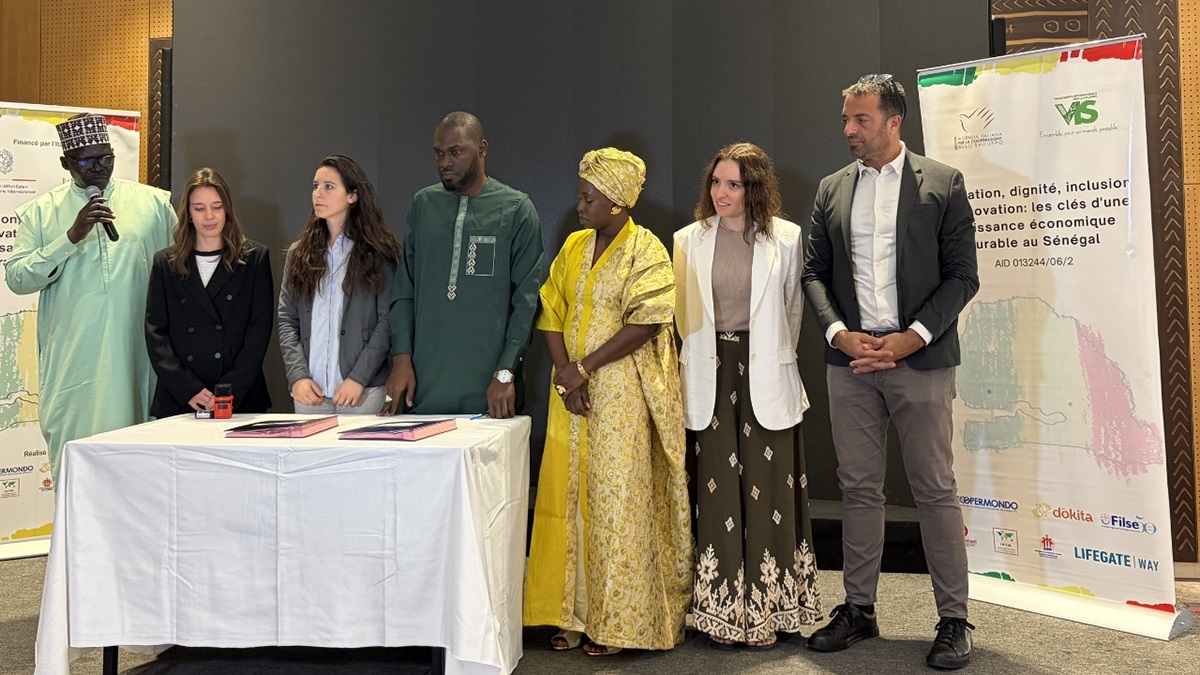
The main objective of the project is to promote decent and inclusive work by strengthening the skills and employability of young people, with a particular focus on the most vulnerable groups, such as migrants, returning migrants and people with disabilities. The initiative will be developed along the migration route that crosses the regions of Dakar, Thiès, Kaolack and Tambacounda, involving eight vocational training centres, local authorities and employment centres.
The project involves the collaboration of a broad partnership, which also includes “Dokita ODV”, “Coopermondo”, “Association Saint François de Sales du Sénégal”, “IDTM – Institut Droit du Travailleur Migrant”, “CNOS-FAP”, “FILSE – Finanziaria Ligure per lo Sviluppo Economico” and “LifeGate Way”.
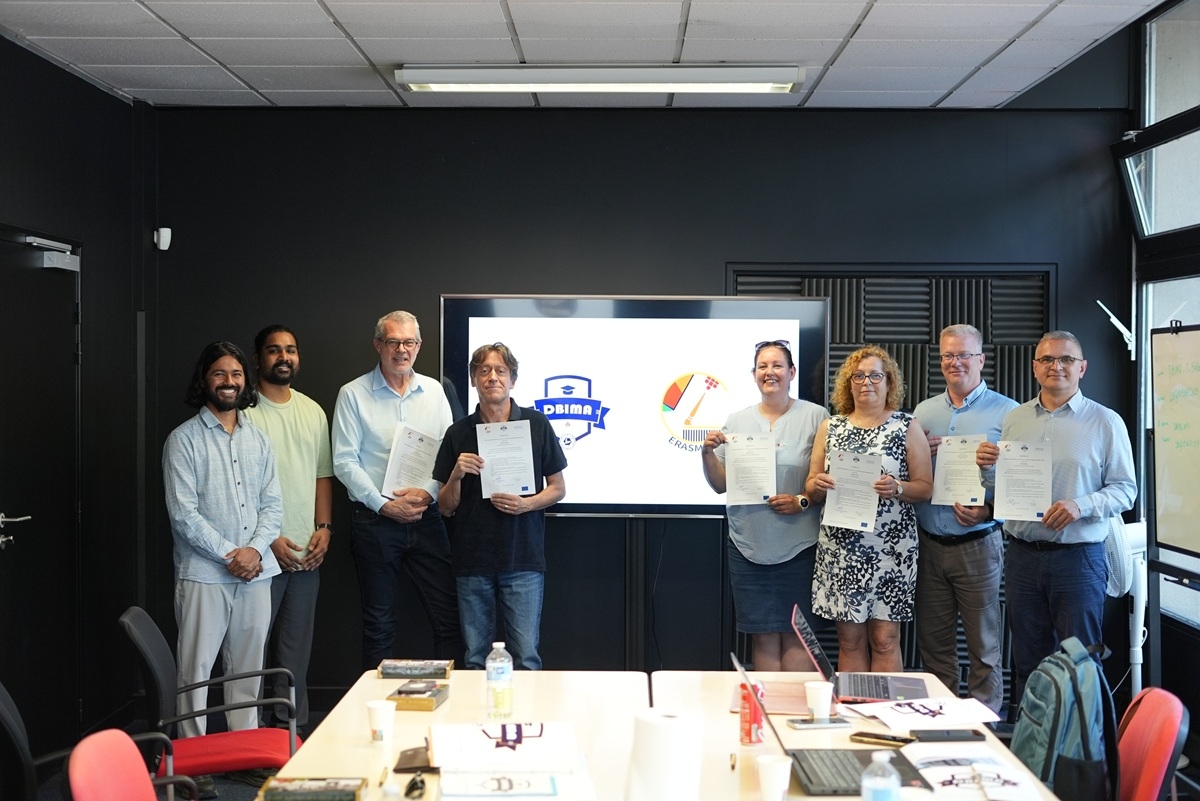
The signing of the collaboration protocol brought together over 50 institutional representatives, technicians and operational partners, and represented not only a formal moment, but above all the start of a structured collaboration between civil society organisations and Senegalese public institutions. This collaboration is based on shared objectives of sustainable development and social promotion, consolidating the institutional roots of a strategic initiative to strengthen vocational formation and socio-economic inclusion in Senegal.
The Protocol establishes a clear framework for operational coordination between VIS and the Ministry, defining roles, responsibilities and governance mechanisms that will accompany all phases of the project. This tool is essential to ensure the consistency, effectiveness and sustainability of interventions, while ensuring the full integration of actions into national policies for technical and vocational formation and the promotion of youth employment.
The project is now entering its operational phase, with the first activities being launched in the four regions of intervention.
The initiative aims to contribute to improving socio-professional integration opportunities for young people, people with disabilities and vulnerable groups through an integrated approach that acts on several levels.
In particular, it is structured around three main axes:
- Strengthening the technical and vocational formation system: training centres and actors in the sector will be supported to improve the quality of formation provision, promote more inclusive pathways and strengthen the technical and transversal skills of the target audience, in line with the needs of the local labour market.
- Enhancement of public employment services and the transition from school to work: the project will work in close collaboration with public structures and guidance units to improve support services for professional integration, facilitating the transition from formation to employment and promoting a better match between labour supply and demand.
- Promotion of entrepreneurship and economic inclusion: incubation, support and formalisation activities for micro-enterprises and cooperatives will be launched, with a particular focus on young people, returning migrants and people with disabilities. The transfer of innovative skills and technical support will help to strengthen the economic autonomy and resilience of local communities.
Through this collaboration, VIS and the Senegalese Ministry of Employment and Vocational and Technical Education confirm their commitment to pursuing a common path, with the aim of building an education system that is more accessible, inclusive and capable of responding to the challenges of the present and the future, focusing on people and their right to decent employment.
Source: VIS