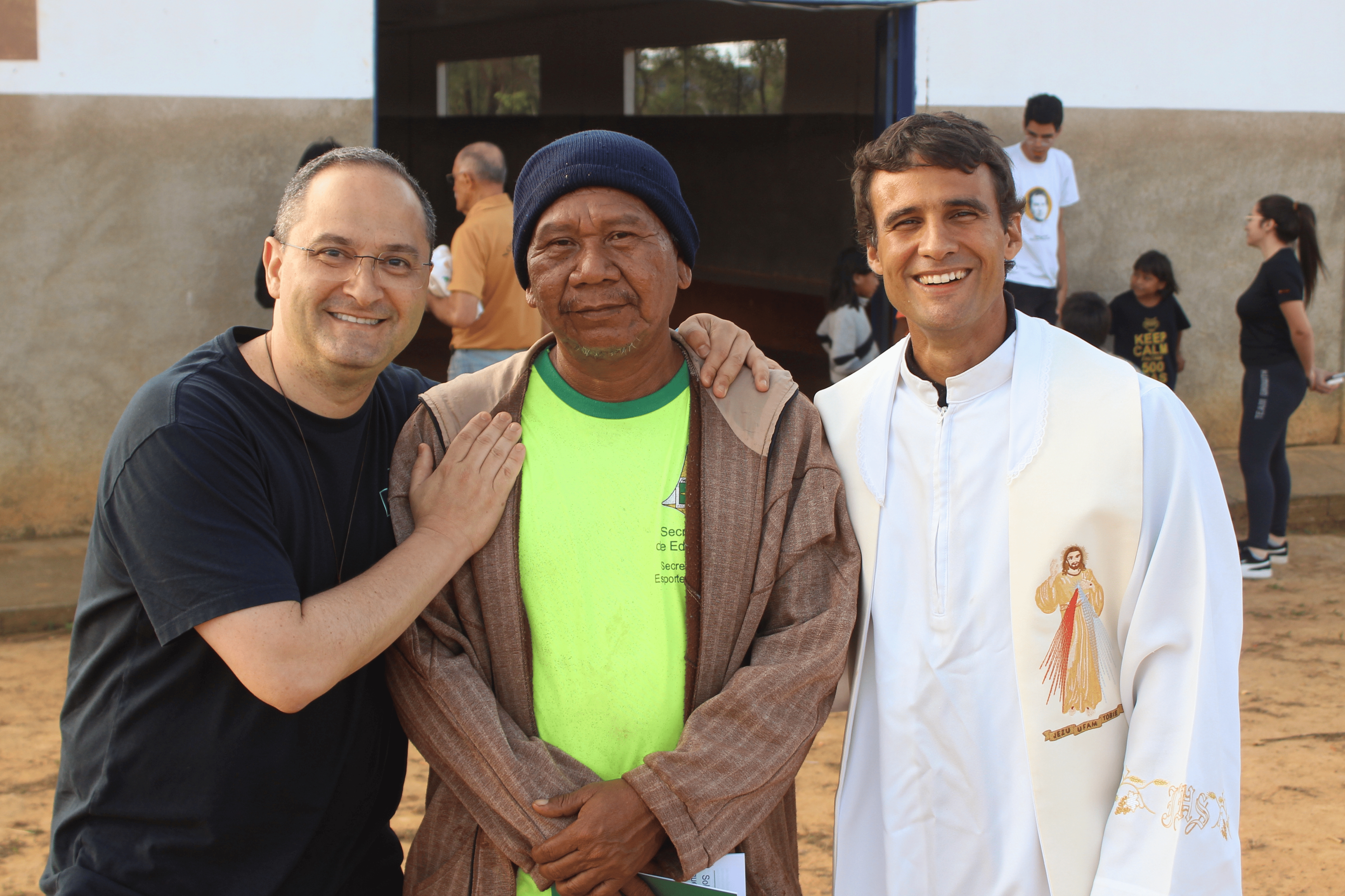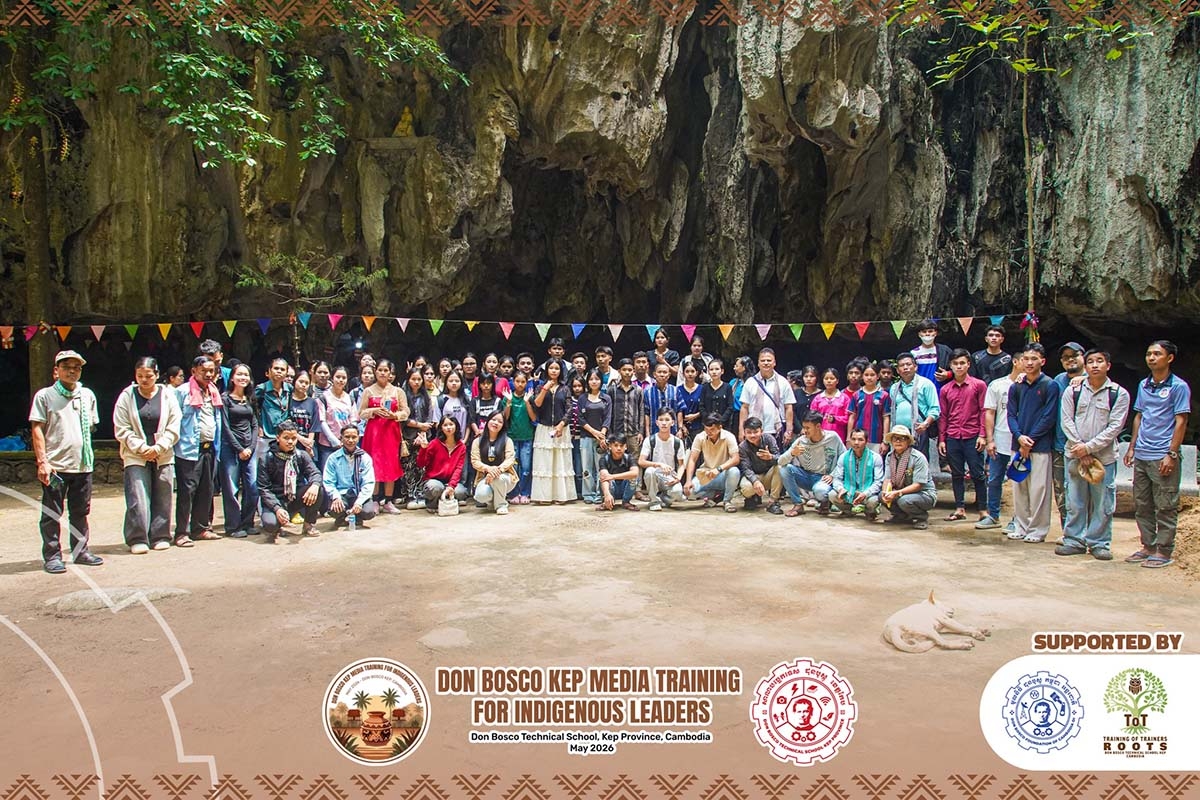
The event gathered 80 Indigenous participants — 40 secondary students (Grades 9–12) and 40 technical students specializing in electricity, media communication, secretarial studies, and information technology — representing the Jarai, Tampung, Kreng, Kraveth, and Lun peoples. They were accompanied by 10 Cha‑Thom elders, fostering a rich intergenerational dialogue that combined youthful technological skills with ancestral wisdom. The initiative is sponsored by ROOTS Asia, the Catholic Network of Asian Indigenous Peoples, and the Don Bosco Foundation of Cambodia.
Designed to promote teamwork among generations and strengthen communication across Indigenous groups, the program placed Indigenous youth at the forefront of leadership. Through the creation of a video, a song, and a dance, participants expressed their cultural identity in dynamic and creative ways. The methodology moved beyond conventional workshop models, empowering “organic intellectuals” — leaders emerging from within Indigenous communities — capable of guiding the spiritual and cultural renewal of their peoples.
At Don Bosco Kep, where most students come from rural and Indigenous backgrounds, education is envisioned as a space of nature, tradition, and spirituality rooted in local cultures. The Salesian Preventive System is contextualized through interculturality and inculturation, affirming ancestral wisdom as a path of formation. In contrast to educational models that often marginalize Indigenous identities, this training promoted reconciliation and empowerment, ensuring that traditions, languages, and spirituality are preserved and strengthened.
During the sessions, elders shared knowledge of medicinal plants, ancestral rituals such as weddings and funerals, and reflections on safeguarding Indigenous identity amid globalization, while youth translated these teachings into multimedia productions. The program concluded with a visit to Kampong Trach Kiri Mountain, where a local elder — guardian of ancient caves marked by Cambodia’s historical trials, including the Khmer Rouge period — highlighted the sacred connection between land, memory, and faith. The training reaffirmed education as a space where Indigenous identity is not erased but celebrated and empowered for the future.